
Charlie Aky is the kind of artist who is already making things worth paying attention to. A guy from the UK who walked away from music in his teens, he found his way back during lockdown through a guitar and TikTok covers, and in 2024 signed with Berlin-based label SEAR Music. His debut EP No Drama drew warm reviews, but his new single “Perfume Regret“ is a different conversation entirely: quieter, deeper, more vulnerable. The song was born from the chance scent of someone else’s perfume in a lift — and from the way a single second can drag you back into the past whole.
We spoke with Charlie about memory, scent, silence in music, and why sometimes you don’t need to explain anything — you just need to feel it. Getting him pinned down for an interview turned out to be quite the quest — schedules, time zones — but we finally managed to cross paths, and the conversation came out exactly the way it was meant to: low-key, honest, and without any unnecessary fuss.
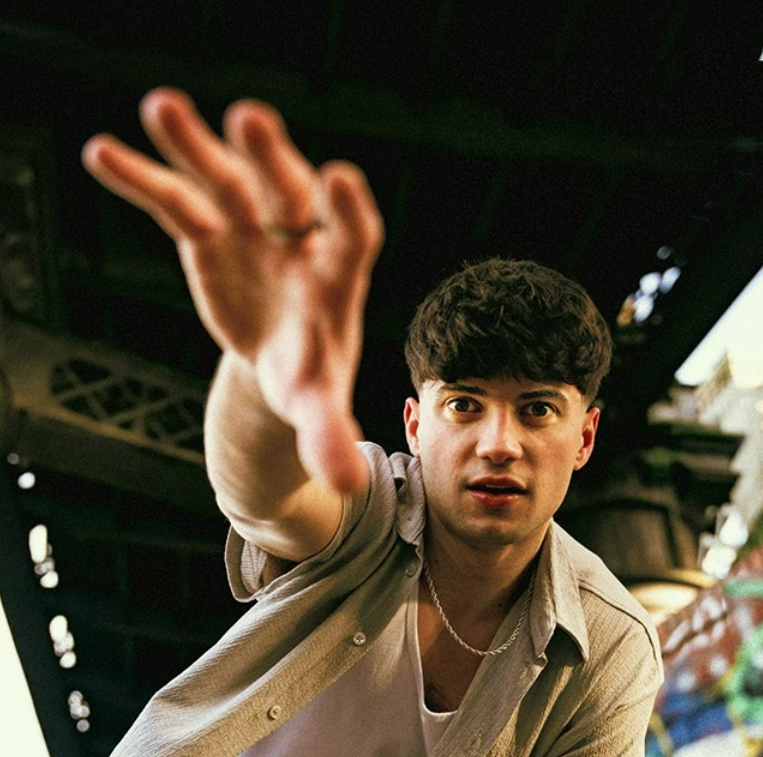
Hey Charlie, I really value you taking the time — with everything you’ve got happening in the studio, music, and all the other aspects of your life, it truly means a lot. Most songwriters will tell you their best material comes from the big stuff — the breakup or the 2 a.m. fight. But “Perfume Regret” didn’t come from any of that. It came from standing in a lift. A few seconds. A scent. Do you think the smallest emotional moments are actually the hardest ones to write about, precisely because there’s nothing to hide behind?
-I think yeah, in a way. A lot of the time it’s just about really digging into how you actually felt in that moment, especially if you want to create proper imagery. You can’t really rely on events, and that’s quite scary, especially if you’re in a session with other people. It does make you feel a bit exposed. It’s like you’re trying to show people something that’s invisible, so every line kind of has to carry weight. And when it works, it can hit even harder than a big story because people recognise those small moments in their own lives. So yeah, those smaller emotional moments are probably the hardest to write about, but they can be the most powerful in a quiet way.
There’s a version of “Perfume Regret” that doesn’t exist — the bigger, louder version with the anthemic chorus and the soaring bridge. You can almost hear the ghost of that arrangement hovering around the track. But you went the other way. You leaned into softness, into restraint, into the space between the notes. Was there a moment in the studio where you had to actively resist making the song bigger? How do you know when a song is asking you to hold back instead of push forward?
Yeah, I think there probably is a bigger version of it, and we definitely went near that at times. It’s quite easy to, you start building it up and it naturally wants to go somewhere more anthemic. But I think if it gets too big, you start losing other parts of the song. The smaller details, the feeling that actually made it what it was in the first place.
So we ended up pulling things back a bit and just letting it breathe more. I don’t think there was one clear moment where we decided that, it was more just a feeling. Like you can tell when you’re doing too much. And with that one, it just felt better to hold back and not overdo it.
What’s interesting about “Perfume Regret” is that it doesn’t try to fix anything. Most pop songs about exes either end in closure or in longing that implies hope — maybe we’ll get back together, maybe I’ll get over you. This one just… sits with it. Is it harder to write a song that refuses to resolve, or does the resolution feel like the lie you have to resist? Do you ever feel pressure — from the genre, from listeners — to wrap emotions up neatly?
Yeah, I think it is harder, because you’re kind of going against what people expect. Most songs want some kind of resolution, but this one didn’t and that’s what made it feel honest. A lot of the time, though, it kind of just flows. You write and you feel where the song should go while you’re in it, rather than trying to force it somewhere. And with Perfume Regret, it just felt like the song wanted to sit with the feeling instead of fixing it. Sure, there’s always a bit of pressure to wrap things up neatly, from the genre or listeners, but I think you can sense when that’s not right. And this one definitely wasn’t.
No Drama was praised for being emotionally open and anthemic — big feelings delivered with big sound. “Perfume Regret” is almost the inverse: big feelings delivered with a whisper. Do you see “Perfume Regret” as a natural evolution from No Drama, or more like a side of yourself that was always there but didn’t have room to breathe on the EP?
I do think it’s a natural progression from No Drama, but it’s also its own thing. No Drama was all about raw emotional takes, big feelings delivered straight up, with nothing to cloud the vocals. I think Perfume Regret is interesting because, on the surface, it’s got a lot of energy—it’s upbeat in its sound—but underneath, the message is quite somber. That tension between how it feels and what it’s really saying is what makes it feel exposed.
Perfume is such a specific, almost literary trigger to build a song around. Writers have been obsessed with it forever — Proust had his madeleine, but really it was about smell, about how a sensory detail can collapse time. You’ve essentially written a pop song about involuntary memory, which is a wild thing to pull off in three and a half minutes. And you did it without making it feel academic or precious — it still feels like a pop song, not a philosophy lecture. Are you someone who generally writes from sensory details — a smell, a texture, a specific image — or was this an exception?
In a way, I suppose it was a bit of an exception, but it also fits with how I usually write, drawing from personal experiences. I went into the writing session really wanting to challenge myself, and this small moment in the lift had just happened a few days before. The challenge was turning something so small into a full song without overthinking it. I wanted it to feel natural, not academic. It’s still a pop song, it still has to work as music first, but those sensory moments give it depth and honesty.
You stepped away from music as a teenager, and then lockdown brought you back. That gap is fascinating because it means the person who came back to music wasn’t the same person who left. The kid who walked away didn’t have whatever it was that lockdown shook loose. A lot of artists talk about finding their voice, but you literally lost yours — or chose to put it down — and then picked it up again in a completely different context, alone in a room with a guitar and a phone. What was the version of you that walked away from music afraid of? And do you think that fear had to exist for the version of you that came back to be any good?
I’m going to be completely honest, because this is really important to me. I’m currently on a school tour, talking to kids about my experiences growing up and why I left music. I think I was scared of people thinking I was different or weird, and of being made fun of. Singing as a boy just wasn’t seen as “cool” when I was a teenager, and people really took the mick out of me for it. I experienced a lot of peer pressure and almost became a completely different person because of it.
I do think that fear had to exist. It gave me perspective, and eventually I found the courage to not care if I was judged. Lockdown really made me realise life is too short, and you’ve got to do what you love, regardless. That’s what brought me back to music and it changed the course of my life completely.
You went from posting guitar progress videos on TikTok to busking on actual streets to signing with a Berlin label. Those are three completely different performance contexts. On TikTok, you’re performing for an algorithm. On a street corner, you’re performing for strangers who might keep walking. In a studio, you’re performing for yourself. Each one teaches you something different about what it means to hold someone’s attention and what happens when you don’t. Which of those three stages — the screen, the street, or the studio — taught you the most about who you are as an artist?
I think it’s busking. Honestly, I probably wouldn’t have had the confidence to do any of this without that experience. Being out there on the street taught me so much, how to play, how to hold people’s attention, and how to connect with strangers in a real way.
It’s one thing to post a video on TikTok or record in a studio, but busking forces you to read the room and make people stop and listen. That experience really shaped who I am as an artist and gave me the confidence to take the next steps.
You cite Dermot Kennedy, Ed Sheeran, Shawn Mendes, and Billy Joel — which is a fascinating quadrant because they share emotional directness but almost nothing else sonically. Is there one of those four whose influence you’re actively trying to move away from as you grow?
I think all of them have definitely shaped me in some way, but if I had to pick, I’d say Billy Joel. I have a lot of respect for him and what he does, but sonically, I’m trying to move in a different direction. I don’t want to sound like anyone else. I want my music to feel like me.
Dermot, Ed, and Shawn have all taught me about being direct with emotion, which is something I really value. I’m still figuring out my own sound and the ways I want to express those feelings, but looking at the stuff I’m yet to release this year, I think my sound is really starting to form. It’s about taking what resonates and leaving the rest behind.
You said something that stuck with me — “Little Charlie would be very proud of where we are now.” That’s a beautiful sentence, but it’s also a heavy one, because it implies that little Charlie needed something to be proud of. A lot of artists talk about their past selves with cringe or distance. You talk about yours with warmth. If you could play one song — for the teenage version of you who walked away from music, which song would it be and why?
I think for me it would be Perfume Regret. It’s probably the most exposed I’ve ever been in something I’ve released. Every detail, every moment of the song feels really personal, and I think that honesty comes through. At the same time, it shows how far we’ve come musically, how much the sound has grown and developed.
It also really highlights the work of the amazing team around me. From the producers to the writers to everyone helping shape it, this song wouldn’t be what it is without them. Honestly, it would be amazing to show little me how far we’ve got so far, it’s kind of surreal to think about. I feel like it’s a real milestone for me, both creatively and personally, and it’s the first time I’ve felt like a release could really represent who I am as an artist right now.
Alright, let’s end on something fun. You’ve said this new chapter is about confidence and not taking life too seriously. So here’s a completely unserious question: you’re back in that lift. The perfume hits. But this time, instead of an ex, the scent takes you forward — five years into the future. You step out and future Charlie is standing there. He’s got one sentence for you. What does future Charlie say?
Relax messing up is what make you better. No Drama.
All information provided is prepared in accordance with editorial standards and is intended to offer useful insights for readers. Please note that the opinions, interpretations, and evaluations expressed by the author may substantially differ from the viewpoints of our readers or the general public at large, and we respect the diversity of opinions.





 Indie Boulevard Magazine