
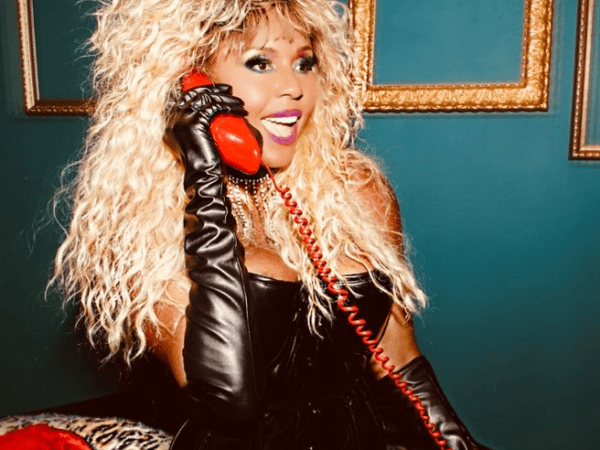
JAMMA is an Italian in Los Angeles who spent over a decade studying, performing live, and staying silent in the studio before releasing a single thing. Her music smells of blues, rock, and Southern Italian folk all at once — smoky vocals, sweaty sound, lyrics where Neapolitan dialect crashes in at the exact moment English is no longer enough. Her debut single “Farewell“ is about leaving home, and the second, “American Ways,“ is about a love affair with an age gap that erupts into Neapolitan by the finale so intensely the studio walls still seem to be vibrating. Both tracks will appear on the EP Presents — three songs about life, love, and death.
We spoke with Jamma about why it took her so long to commit to recording, about how Italian and American folk are pulling the same rope from opposite ends of the world, about Neapolitan dialect as the last frontier of honesty — and about why womanhood doesn’t owe anyone a single tidy formula. She also put together the perfect three-song playlist for a warm late-night drive after listening to Presents — but that comes at the very end.
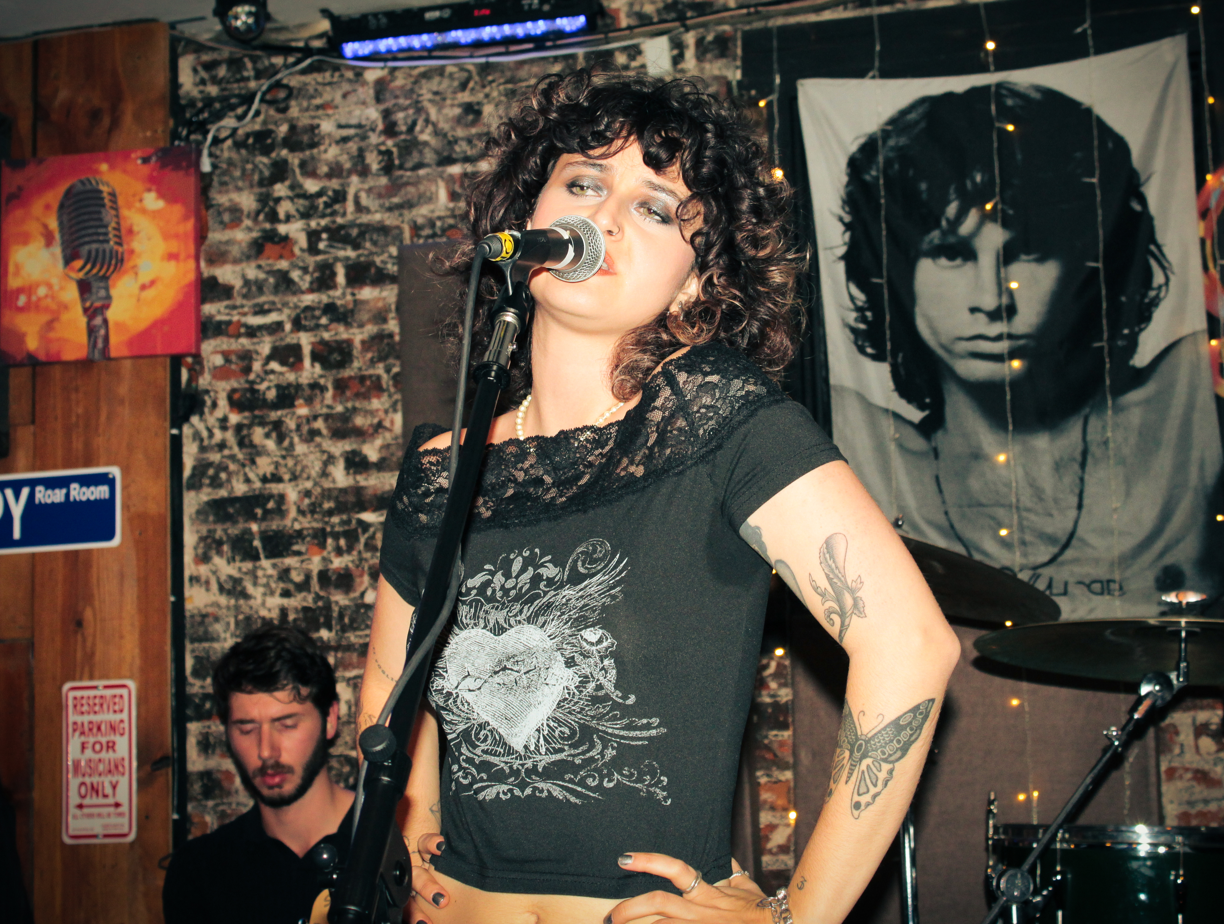
Hi Jamma, it’s a real pleasure to speak with you! There’s something almost contradictory baked into “Farewell” — it’s a song about leaving, but it doesn’t sound like someone who’s already gone. It sounds like someone standing in the doorway, one foot in and one foot out, holding the door handle a little too long. When you were writing “Farewell,” were you more afraid of leaving or more afraid of what would happen if you stayed?
Thanks you it’s a real pleasure for me as well! I love how you pointed out this contradictory felling: in “Farewell” I tried blending the nostalgia for the life and loved ones I left, and the empowerment that I felt in taking such a risk. When I wrote this song I had already left, I believe I had been in the United States for a month or so. And you got it right: even tho leaving was scary, for them and for me, staying was scarier.
You’ve called Presents an EP that investigates life, love, and death — which, let’s be honest, is the entire human experience packed into three songs. That’s an ambitious container. “Farewell” opens it, and it deals with departure, which could easily belong to any of those three categories depending on how you tilt it. Did “Farewell” always come first, or did you have to figure out the order by living with these songs for a while?
The songs came to me in the exact order that they are going to be in the EP, and in the order that you listed: life, love and death. This project wasn’t born as a concept album, it’s simply made of the things I was more eager to say. In “Farewell” I chose life, I chose to be in it fully. “American ways” is my love child. And the third one…you’ll see. The title of the EP is also a wordplay, because the cover art is picture from a birthday I had, so the presents could very well be those that I received, and that you can kinda see in the corner. But also: it’s the multitude of presents (as in present tense) that we live in our lives.
Your new single “American Ways” does this thing where the sweetness of the production almost tricks you into thinking it’s a simple love song, and then the Neapolitan dialect comes in at the end and it’s like the song finally stops performing and just is. That shift — from English to dialect, from seduction to eruption — feels like it mirrors the actual experience of being between two cultures, where you’re code-switching all the time until there’s a moment so raw that only your first language, your deepest language, will do. Was singing in Neapolitan dialect at the climax a conscious structural decision, or did it just happen because that was the only language that could hold that much feeling?
There is a funny thing that happened when I’m in my writing-self: I can’t seem to retain memories, so I’m kinda interpreting this with you right now. I know I wanted to blend my tradition with this new world that I’m in, I just didn’t know how. The dialect came naturally out of my mouth. You know, there is something that happens in the brain where if you’re not speaking your native language you are just a tiny bit detached from what you’re saying: like you said, I think my dialect needed to come out because I am the most connected to what I say here.
“American Ways” engages with the age gap directly, which a lot of songwriters would either romanticize into oblivion or avoid entirely. You don’t seem to do either. How do you write about a power imbalance in a relationship without either glorifying it or moralizing about it? Where do you find the line between honesty and confession?
The secret is not in the song, it’s in the relationship. This track was born from a relationship that has grown slowly and steadily. The age gap has been a talking point, an important one surely, but never a secret to confess. I am an adult, I made an adult decision with another adult: I think the awareness that we both had going into this (and our kind natures) were able to create a healthy relationship. In my case there is no fanciness nor disfunction, it’s love.
When you listen to “Farewell” and “American Ways” back to back, there’s a shared sonic DNA — this smoky, almost humid quality, like the songs were recorded in a room that hasn’t had the windows open in a while. But they use that atmosphere very differently. “Farewell” feels more solitary, while “American Ways” needs another body in the room. One is the sound of being alone with a decision; the other is the sound of being tangled up with someone. Do you build the sonic world of a song around the emotion first, or do you find the texture and then let the feeling fill it?
All of my songs come from me, alone in my little studio apartment, with a piano and a guitar. That’s where the vision starts to form. I write like a folk artist and then I go to the studio with my amazing musicians and we bring it to life, together. Believe me when I say I wouldn’t be able to do it without the amazing team that I have: they are so creative and in tune with what I envision. It’s like I make the path, and then we pave it, put lamp posts, signs, benches.
Folk music has this incredible ability to carry the weight of an entire culture in a three-minute song — a murder ballad holds a whole moral philosophy, a tarantella holds centuries of Southern Italian grief and ecstasy. You grew up inside the Italian tradition and then chose to immerse yourself in the American one, which shares some of that same darkness but routes it through completely different landscapes — Appalachia instead of Campania, the Mississippi instead of the Mediterranean. Most people experience these traditions separately. You seem to be trying to braid them together. What’s the thing that Italian folk and American folk share that nobody talks about? And where do they fundamentally disagree?
You’re absolutely right, and it’s so difficult to grasp. There is a shared human experience in folk music, Italian or American: it’s the feeling of having your feet planted on the ground, wherever that ground is for you. You also have to remember the socio-economical position of the South of Italy, which can be compared to the South of the US: it’s not by change that the south generally retained more connection with it’s roots, it’s a necessity when you feel forgotten by the rest of the country. As far as disagreeing: they don’t, they are pulling the same rope, just from opposite sides of the world. Folk music is not scared of saying the quiet part out loud, it just so happens that the quiet part is different for each country. However, I thunk Italian and Neapolitan folk were more aware of the US, than the other way around: it’s in Fabrizio De André, in “Tammurriata Nera”, and many more examples.
Over a decade of studying and performing before releasing your first single. You clearly weren’t waiting for permission. But you were waiting for something. Was there a specific moment where you knew the songs were ready, or did you just get tired of carrying them around without letting anyone else hear them?
I think I was waiting for “the right moment”, when I was going to feel “ready”. And instead this “right moment” never came. I just kept on feeling scared to share such an intimate part with others. Eventually, decided go through with it while being terrified. In this I have to thank the people around me (musicians and non-musicians) that supported my winy-ass.
You’ve been described as “the anti-heroine of Gen Z,” which is interesting because the anti-heroine is usually someone who rejects the narrative that’s been handed to them. Gen Z already has a complicated relationship with narrative — everything is deconstructed, everything is meta, sincerity is both craved and suspected. And here you are making music that’s unapologetically raw, sensual, gritty. It’s not curated to look uncurated. It just is. Do you feel like you’re pushing against your generation’s instinct to aestheticize everything, or do you think the rawness itself is what Gen Z actually wants but doesn’t know how to ask for?
I believe that both things can coexist: my generation may want to aestheticize life, because we are very aware of what raw can be like. Some of us want raw, and struggle to find it, that’s where I come in. I grew up listen to a genre of music where raw was the requirement, too much curation was a pose. And it’s so easy to pose, but I’m no statue.
“Romantic and punk, stylish and decadent” — you talk about womanhood as a dichotomy, as if the whole point is that these opposites coexist without resolving into something tidy. That’s a very different proposition from the girlboss narrative or the sad-girl aesthetic or any of the other neat boxes that get offered to women in music. You’re not choosing a lane. You’re saying the lane itself is a lie. When did you first realize that the version of womanhood you were being sold didn’t match the one you were actually living?
When I was growing up I always rejected sugarcoating myself, I always felt like my design was to live on the cusp of femininity: I own it and reject it in many ways. Among all of the models I was exposed to, I purposefully chose the ones that were not fitting in the box. I can be both a “girl boss” and a “sad-girl”, but I can also be enthusiastic, angry, bored, sexy. What is there to resolve? Women are not a puzzle. We need to stay with complexity, it’s a beautiful part of the experience.
Okay, so we’ve talked about blues, folk, Naples, LA, leaving home, love across oceans — heavy stuff. Let’s end somewhere fun. You clearly have impeccable taste, and your music sounds like it was born on a late-night drive with the windows down. So let’s say someone’s just listened to Presents for the first time, front to back, and now they’re getting in the car. The EP is over, the night is warm, and they need three songs to keep the feeling going. What are the three songs you’d put on after Presents ends?
This is an amazing question and also such a difficult one. I think “Je so’ pazz” by Pino Daniele, “Everywhere” by Paolo Nutini, and “Miss You” by Alabama Shakes.
All information provided is prepared in accordance with editorial standards and is intended to offer useful insights for readers. Please note that the opinions, interpretations, and evaluations expressed by the author may substantially differ from the viewpoints of our readers or the general public at large, and we respect the diversity of opinions.




 Indie Boulevard Magazine