

Provocation in a track title is one of the oldest marketing tricks in pop music. Name a song so that a person stops for a second, feels a slight unease, decides to press play after all. The scheme has worked since time immemorial, and it works for one reason: the listener expects the title to be a promise. That inside will be what’s written on the outside. DJOUHER with the track “I Killed Her” does something to this expectation that rarely succeeds: she reverses it completely.
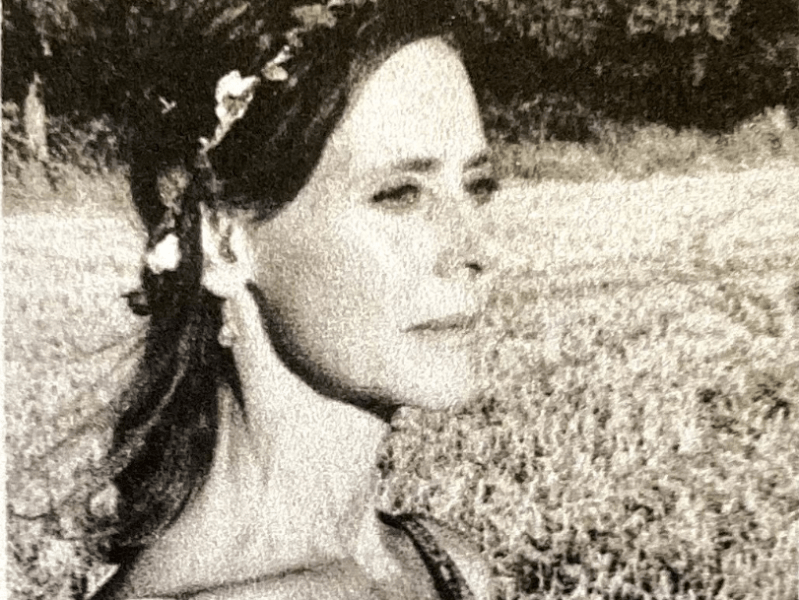
The listener comes for a thriller and gets a sunrise over water. And this reversal is deliberate, precisely calibrated as an artistic gesture. Because a track with such a title, sounding this glamorous, this warm, this utterly devoid of shadow—that’s already a statement in itself, before the first verse even begins. DJOUHER grew up in the mountains of Kabylia, and this geographical fact is heard in the music physically.
The track’s intro works through contrast with expectation. The melody is hazy, sensual, with warm shimmers that glide across the surface—and this is the first deceptive move. The rhythm is broken, slightly desynchronized, with the languor of a drowsy morning. This is classic pop in structure—and completely non-classic in feel.
Then the track shifts. The melody remains almost the same—but the character veers in another direction. DJOUHER‘s voice, up to this point quite earthly and corporeal, becomes airy. Detached. An Eastern dance of shadows instead of a drowsy morning sway. A light drama where a dancefloor build-up was expected. For a genre typically described as light indie-Latin, this is a strange, almost audacious choice of direction.
And the finale. The track ends in a way that leaves the listener at a point of bewilderment—a pleasant, intriguing bewilderment, where you want to rewind and walk the route again. This effect of incompleteness is one of the most difficult to achieve in pop music. Most songwriters fear it and close the track with a sense of resolution at any cost. DJOUHER leaves the door open intentionally.
An honest conversation about “I Killed Her” requires acknowledging one thing: this track exists entirely on the strength of its ambiguity. Remove the provocative title—and part of the charm evaporates. Remove the Eastern turn in the middle—and you get a beautiful but predictable indie single. DJOUHER constructs an architecture where all elements hold onto each other: the title needs the music, the music needs the voice, the voice needs the finale. Pull one out—and the rest collapses.
At the same time, the track itself exists in a zone of deliberate incompleteness—and here one might ask: how much of this is a choice, and how much is the boundary of capability? The transition from drowsy sunrise to mystical Eastern space captivates precisely because it happens almost without warning. But this same abrupt shift leaves a sensation of two tracks stitched into one. Which, however, is exactly what makes “I Killed Her” such an unforgettable single: it compels you to return in search of understanding exactly where the transition occurred—and each time the answer turns out slightly different. This is the track’s main achievement.
All information provided is prepared in accordance with editorial standards and is intended to offer useful insights for readers. Please note that the opinions, interpretations, and evaluations expressed by the author may substantially differ from the viewpoints of our readers or the general public at large, and we respect the diversity of opinions.








 Indie Boulevard Magazine