
If you don’t know Lettie yet, that’s partly by design and partly the cruel math of an industry that rewards Spotify-gaming dentists over artists who actually play their instruments — a real anecdote, by the way, and one that became a strange catalyst for Pirate Lover.
The acclaimed Suffolk-born composer and multi-instrumentalist has spent nearly two decades building one of the more quietly extraordinary careers in British music: recording at the now-lost Edison Studios off Times Square, touring Europe as Peter Murphy’s support act (and merch seller), earning praise from Roger O’Donnell of The Cure, lending ghostly vocals to a John Cooper Clarke record, and once attempting to play keyboard with her big toe while singing and playing electric guitar — a move that left Gina Birch of The Raincoats genuinely impressed. Her new album, Pirate Lover, is a nine-track meditation on memory, ruin, and unexpected love — recorded largely at her kitchen table with an acoustic guitar, a handful of trusted collaborators including Dave Barbarossa, and the mixing touch of Grammy winner Cameron Craig. It’s pastoral, stripped-back, and defiantly human. We talked about all of it.
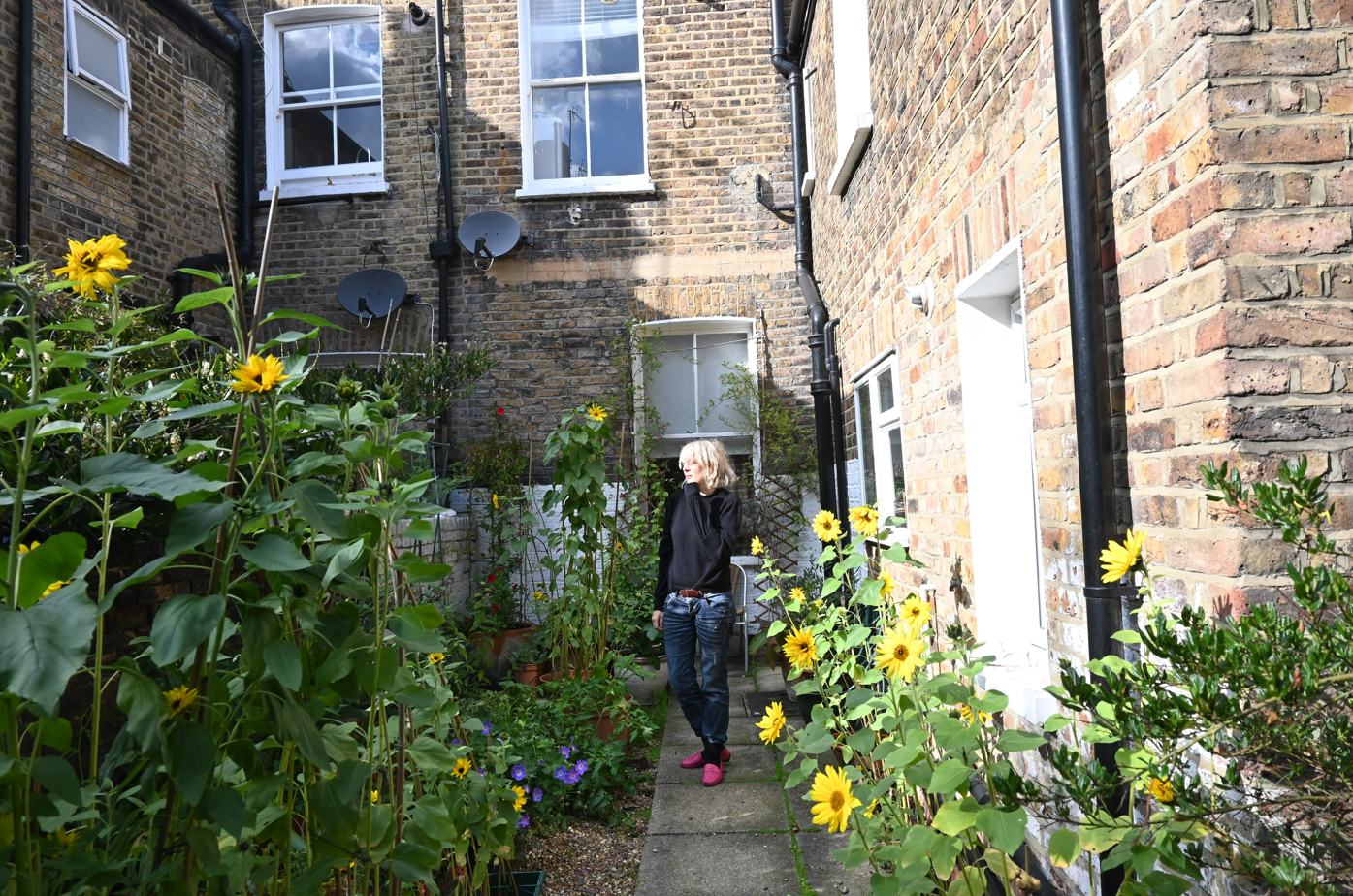
You’re spending your days working for someone who’s been, simultaneously, a politician, a prisoner, and a priest — which sounds less like a job description and more like the plot of a Graham Greene novel. And then you come home and make music about love and landscapes being swallowed by power stations. Most people would struggle to leave work at the door. How did that daily collision between someone else’s extraordinary, turbulent life and your own interior world actually shape the emotional texture of this record?
I think if music is honest it picks up on everything like osmosis. I think the hardest part for me is to not get overwhelmed because when you work for someone famous they tend to take over – not because they mean to – but because they are usually quite strong personalities. But my boss has a library in his head. I am so fortunate to be around an extraordinary mind and someone who has seen, first hand, so much in his 83 years. I work four days a week so I am extremely lucky that on Fridays I can leave work at the door and concentrate more on my own stuff.
Let’s talk about the dentist. Because honestly, it might be the most quietly devastating origin story in recent memory — a man who has never played a gig, never touched an instrument, generating thousands of Spotify streams through AI while you’re out here with six albums and a career built on genuinely knowing how to play keyboard with your big toe. That must have landed somewhere between absurd and genuinely painful. When you found out, what was the first thing you felt — and when did that feeling turn into a creative decision?
No it really wasn’t devastating at all – the music was not anything like the music I create – in fact it was funny. The only reason I brought it up was because I had sent him some instrumental tracks to work on that were real and he said he didn’t have time to write me another verse for it. Months later he was boasting about how brilliant AI for music is! He’s a lyricist and he’s not bad so it works well for him!
You’ve described your new album as an antidote to copy-and-paste recording. But “antidote” is a strong word — it implies something toxic that needs countering. Molly Drake, the old Blues artists, your kitchen table, Dave Barbarossa from Bow Wow Wow — you essentially built a time machine out of analogue instincts. Do you think the music industry is actually sick, or are you more optimistic than that word suggests?
I do think the music industry is in a middle of the road malaise, but things change and there will be a backlash. My friend sent me a vocal coach’s assessment of Justin Bieber’s extraordinary performance at the Grammys in his boxer shorts, and he was proving his talent – nothing but himself up there – no production – just him and a loop pedal. The omnipresence production of jingly tunes that have huge choruses that everyone can sing along to with a massive middle 8 using the major keys usually in those chunky triad uplifting chords with lyrics that are so open ended they could be placed on any advert will eventually bore people. I think it is already happening.
A near-death experience. A family gambling addiction. A hometown physically disfigured by a power station. A new love with an ex-racing car driver. How do you compress that much weight into something that still has space to breathe?
I think a lot of people are really struggling at the moment. I know people my age looking after elderly parents at the same time as looking after young children; I passed a railing yesterday covered in flowers where a woman had thrown her 18 month old baby from the top floor of a flat in Westminster; I know people who are terminally ill and I know people who are struggling to pay the rent to live so I am lucky I have space to breathe – some people have no space at all.
I am reading this question in two different ways by the way so forgive me because I have another point to make in regards to space. I spent much longer this time on the space around the music. It was always too crowded – I had a bad habit of filling it all up but it was Bob Dylan who said I think that the space around the song is just as important.
Gina Birch from The Raincoats watching you play keyboard with your big toe while simultaneously singing and playing electric guitar is a very specific image. It suggests someone who is fundamentally restless with the limitations of the human body — or at least the conventional ways musicians use it. You’ve also made a point of avoiding backing tracks your entire career. Where does that almost stubborn insistence on doing everything live and physically come from?
One of my favourite artists is Laurie Anderson and she really is theatrical in her music. It’s like she has created an entire language that is just her own. She is a very physical performer and uses her body in very imaginative ways. In fact at the end of her last concert a few months ago we all did a few Tai Chi exercises. I was really interested in making solo performance interesting but it is very hard. I got lost in my loop pedal for many years going on and on and on with my keyboard. I realised the loop pedal can get irritatingly annoying if you don’t stop the loop occasionally!
And so to backing tracks. Most people do not care at all about backing tracks and I feel bad being so negative. There are many reasons why people use backing tracks. For smaller artists it’s too expensive to pay for musicians on the road. For big acts they want to ensure the audience get what they paid for which is a gig that sounds just like the record. But to me they literally numb the tracks – it’s like eating frozen pizza or watching karaoke. The key problem is the mixing of the backing track. They have no colour because they are a block of sound which no matter how much you put on top (real instruments) it’s somehow dead because it’s flat. I do not include DJs or electronic acts in regards to my dislike of the backing track– one of my all time most memorable gigs was seeing Chris Cunningham AKA Aphex Twin in 2010 but he uses visuals like no other.
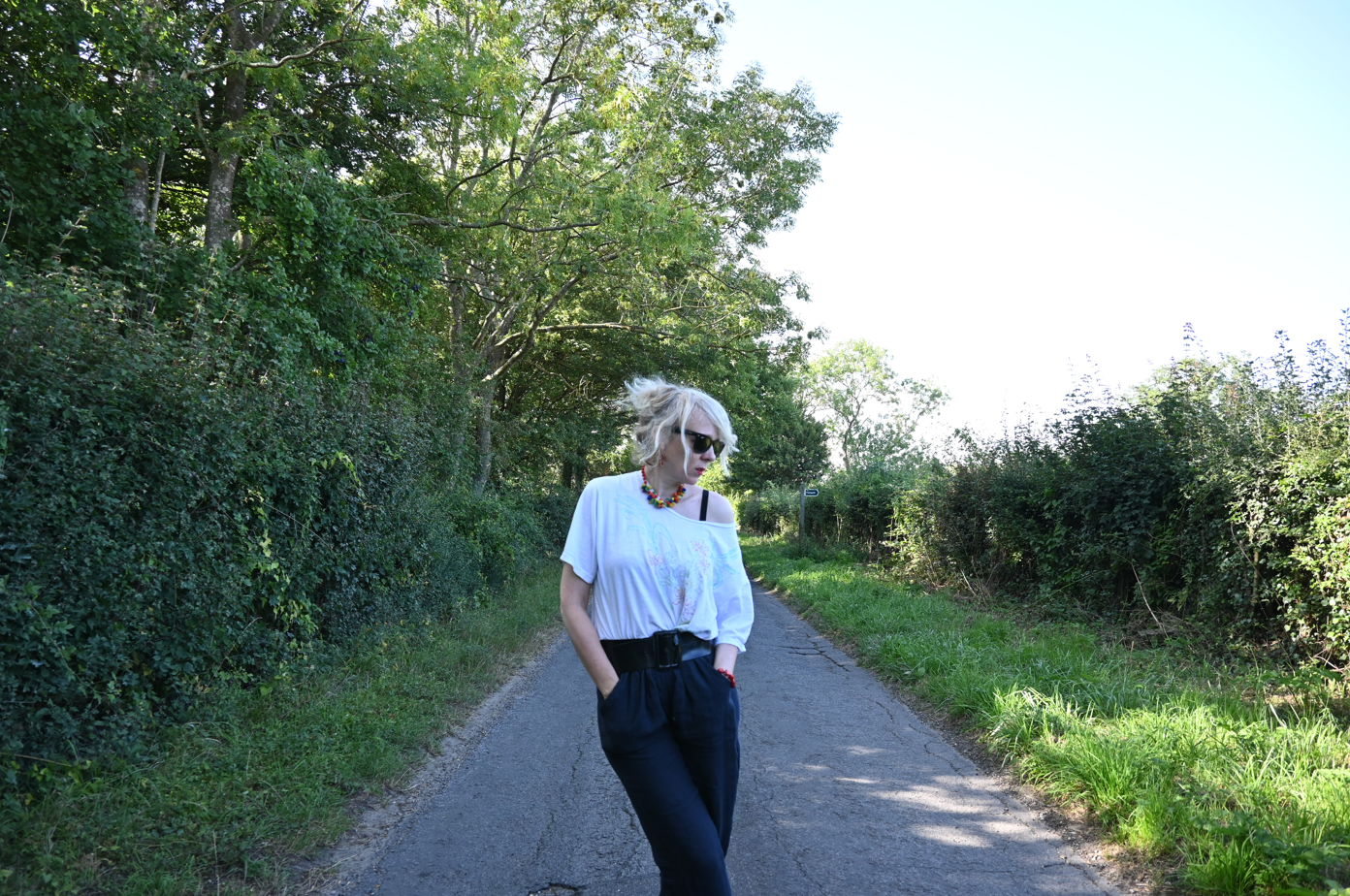
You met David Baron on MySpace in 2008 and ended up recording in a studio hidden inside a hotel off Times Square that no longer exists. There’s something genuinely elegiac about that — a creative relationship born on a platform that no longer exists, in a room that no longer exists, producing music that very much does. Do you think about what gets lost when places and platforms disappear, and does that loss find its way into your songwriting?
I hadn’t thought of it like that but it was nearly 20 years ago and things change all the time so I shouldn’t be surprised. I actually took a video of the studio which I must try and retrieve because it’s me walking through the foyer, up the stairs towards to red light and then incredibly to the studio itself. It was magical.
I felt a huge loss with Myspace only because I had a Blog on there which I wrote all the time (including my tour with Peter Murphy across Europe) and one day it was wiped. I couldn’t retrieve it. I have never felt comfortable, as a result, with spending too much time on Social Media. Over the years many people have told me I should be Instagram because I am very visual and I love take photographs, but I felt the same thing could happen again and I just couldn’t bear all that wasted time lost forever. I do Facebook which I know is not trendy these days.
In regards to the Edison Studios, I know David Baron never regretted letting the studio go. They (he had two partners) would have been tied in for another 10 years and it was already clear that nobody could really afford a studio like that and nobody was recording in that way with big orchestras. Ella Fitzgerald and very famous acts recorded in this studio back in the day.
Roger O’Donnell from The Cure calls you “a precious English talent.” That phrase — precious — is interesting. It can mean rare and worth protecting, but it can also carry a faint whiff of fragility, of something that exists slightly outside the mainstream’s appetite. You’ve toured with Peter Murphy, appeared with John Cooper Clarke and Hugh Cornwell, collaborated with Anthony Phillips — and yet you’re still making albums at your kitchen table. Does “precious” feel like a compliment, a discovery, or both?
It’s a lovely compliment from Roger who I haven’t seen in years. I knew him at a time when he wasn’t back with The Cure. I consider myself at best an underground artist or outsider artist who really loves to compose music without worrying about finding a large audience.
What does “home” mean to you now — geographically, sonically, emotionally?
I am renting so geographically, sonically and emotionally it will always be temporary. Over half of what I earn goes on the rent and my boss is 83 years old. My mother lives in Suffolk in a medieval cottage but that is only rented. But the main thing is not to panic like I did last time when I got evicted from my aunt’s house!
The album is called Pirate Lover. Is the pirate in the title you, the person you fell in love with, or something more abstract than either?
At one point I think some of the album was about my ex-boyfriend. He was quite well known older muscian and released a song on his last album implying something about me particularly in the Stop Motion animation he made for it. It made me angry because I cherish the 7 years which I could have seen as wasted and he erased those memories so simply in a single song.
Instead of getting angry I changed the whole timbre of the album from one that had a lot more anger and darkness to a much lighter thing altogether and in the end there’s hardly anything on it about him.
You’ve been doing this since at least 2008 — through Myspace, through the BBC, through Glastonbury, through a historic studio disappearing, through supporting Bauhaus legends across Europe while selling their merch. And now in 2026, you’re making what might be your most stripped-back, uncompromising record yet, just as AI is threatening to rewrite every assumption about what music even is. After everything — what still genuinely surprises you about making a record?
That I persevered with it! It is very hard these days. What came easily when I was younger is laboured. For example lyrically – coming up with original lyrics is difficult; musically because I do not sit down enough with my instruments my playing is not as good as it should be and emotionally as you get older broken hearts are rarer and less dramatic – you feel deeply about everything when you are younger everything hits and hurts deeper, longer, harder. So, I don’t release albums very often and when I do it takes time.
All information provided is prepared in accordance with editorial standards and is intended to offer useful insights for readers. Please note that the opinions, interpretations, and evaluations expressed by the author may substantially differ from the viewpoints of our readers or the general public at large, and we respect the diversity of opinions.




 Indie Boulevard Magazine