
Corner in Bloom have released their new album Tiny Apartment — nine tracks built around the concept of a single day, where the protagonist travels from an antique castle-hotel to a cutting-edge nightclub. This is a release that is certainly worth paying attention to, because here dream pop, Lo-Fi, r’n’b, and hip-hop — all of it is packed into a compact structure, held together by a unified aesthetic and a through-line narrative.
Conceptual journey-albums are a well-trodden genre, but Corner in Bloom approached it from an unexpected angle: instead of a linear route — a photo album. Frames, with jump cuts between them. You see a morning in a castle, and the next page is already an elevator in New York, saturated with the scent of peonies. You fill in the road between the frames yourself, and in those gaps between snapshots lies the album’s central intrigue.
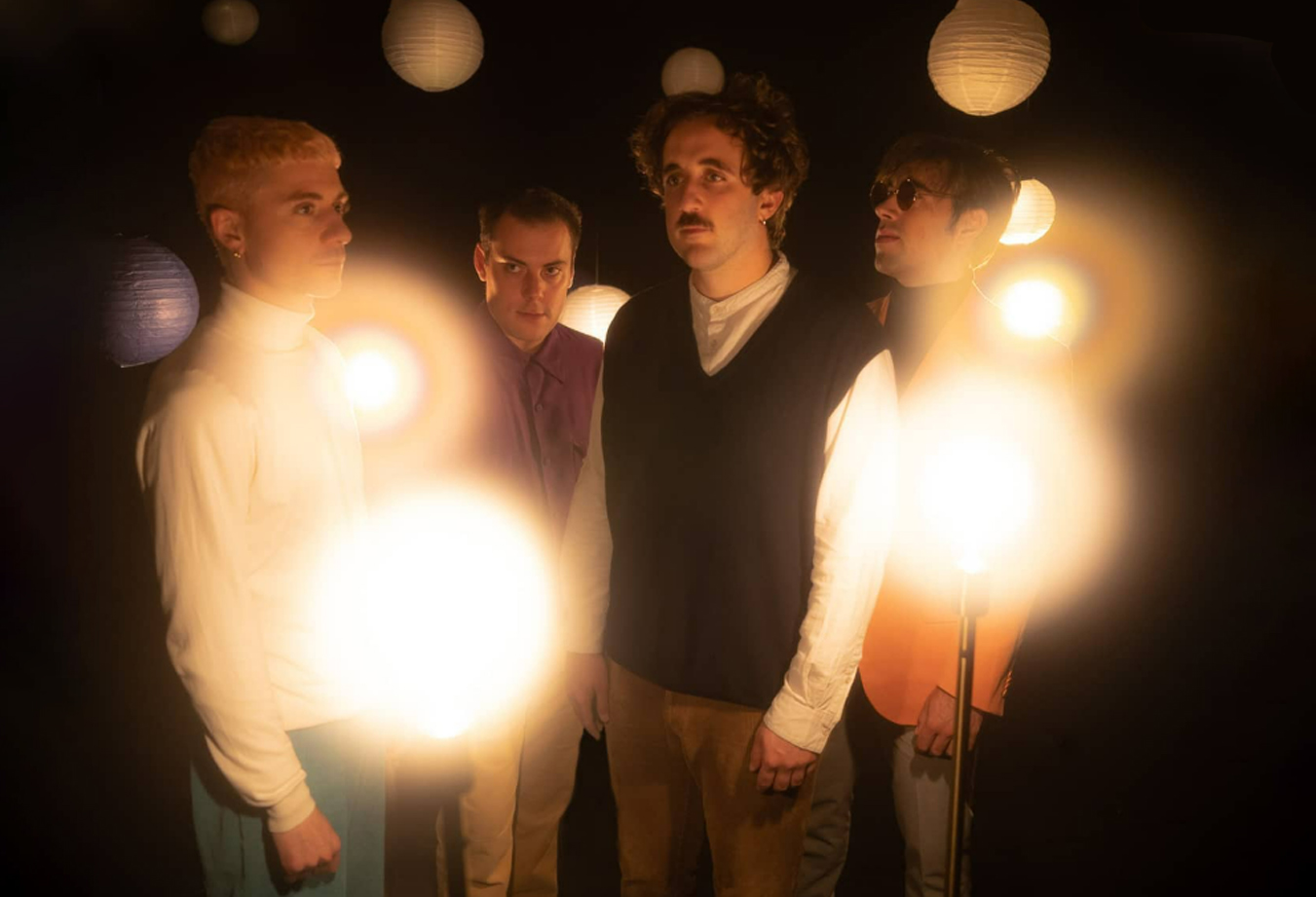
The first thing that came to my mind after a full listen: this genuinely works. The album moves from fog to neon, from piano to beats, from peonies to strobes, and yet the silhouette remains recognizable throughout. Corner in Bloom manage to dress their sound in entirely different outfits while preserving a unified stylistic fabric. That in itself is a serious production achievement, and it is precisely what makes Tiny Apartment a cohesive album — truly cohesive.
Tiny Apartment — I would even characterize it as a showcase album. It displays frames, one after another, and each successive one shifts the lighting, the color palette, the temperature of the air. You stand before the showcase and realize you are looking at the same person in different settings, but the settings are so radically different that you have to look closely just to recognize him.
The opening track “Tiny Princess“ sets the starting point — and it is maximally cinematic. A foggy piano, a castle-hotel, morning rays pushing through a veil of damp air. Restrained synth seeps in through airy vocals, diamond-cut percussion adds depth, and all of it together creates the atmosphere of a dreamy, optimistic morning in a glamorous room. This is also where a device appears that sets the album’s rhythm: the effect of a tape snapping. The page turns. The sound cuts off — and the next frame begins. A well-found device.
“Please Don’t Go“ amplifies the influence of the keys and adds a bluesy tint, colored by the summer light of skyscrapers. After a gentle intro the track suddenly shifts direction, and that shift is one of its greatest strengths. An invigorating shower of keyboard and guitar chords, subdued vocals, an insistent yet gentle energy — the track sounds like a dance in front of a mirror before a workday, and tucked inside are several compelling musical turns that underscore the intrigue.
“Argo“ is the central point of the album’s first half, and the most emotionally charged track in that stretch. The image: a soft-spoken man with a bouquet and a box of croissants ambushes the girl of his dreams in an elevator. Peonies, good intentions, a battle between courage and the fear of rejection — and vocals that here acquire a special intimacy and clarity. The melody turns several times, and at every turn you shudder with delight.
“Blue Loft” is arguably the most playful track on the album — and the one with the clearest commercial instinct. There is a childlike buoyancy to it, something wide-eyed and immediate, that sets it apart from the moodier corners of Tiny Apartment. Of all nine tracks, this one has the shortest distance between the speaker and the listener.
“Calliope” is the album’s summit — its most structurally ambitious track and the moment where Tiny Apartment reaches full emotional altitude. Dream pop laced with arthouse sensibility, vocals submerged in a minor key, sinking deeper with every phrase. The arrangement is layered and deliberate, pulling in directions that most tracks on the record only hint at. If the album is a photo album, this is the page you keep coming back to. Worth hearing once. Impossible to hear only once.
“Dami’s Lullaby“, the track carries a lightness that the rest of Tiny Apartment rarely allows itself, and in that lightness, a curious signal emerges. It sounds like Corner in Bloom testing a doorway they have yet to walk through — a gentle flirtation with a direction that could easily anchor an entire next record. For now, it exists as a single, tender sketch inside a much darker frame. But sketches like this tend to grow.
“Amsterdam (By Bike)” and “Amsterdam (Walking)” are two sides of the same coin. The first is breezy drip pop — light, effortless, gliding. The second feels like its shadow side, as though someone took the original, stretched it slightly, and let the tape chew through it. Same city, different hour. One rides, the other drifts.
“The Same Old Smile“ closes the album in a club atmosphere. The fog clears, and beneath flirtatious keys a full-bodied r’n’b opens up, laced with elements of rap and light club hip-hop. A perfect foundation for dancing — whether in an empty apartment or on a dance floor. Soulfulness duels with the keys, stubbornly steering toward flirtation, and this conflict of two energies — warm and playful — holds the track until its final second.
A glamorous morning with a piano. A bluesy afternoon by the skyscrapers. A children’s lullaby under a jazz pulse. Club r’n’b at the tail end of the night. The transition from one to the next is seamless, and that seamless transition is perhaps the album’s crowning technical achievement.
One could pose the question: are nine tracks enough for the story to sound complete? The route from castle to club is packed tightly, at times too tightly. Certain turns you want to linger on, let them breathe, allow the frame to hang on screen for one extra second. “Calliope” deserves more space. “Dami’s Lullaby” could have unfolded wider. The album rushes in places — out of a fear of losing the listener halfway through.
But in my humble view, that very rush is part of its charm. Tiny Apartment moves with the energy of a person who has an entire day ahead and far too many plans. It grabs you by the sleeve and drags you from one room to the next, from one landscape to the one after it, and when it all ends — you want to flip back to the first page, to the foggy piano, to the morning light in the castle-hotel. Because you already know: this day is worth living through once more.
Corner in Bloom have released an album that smells of French powder and club smoke at the same time. It is a photo album made of expensive paper, left behind by a blonde in a hotel — only inside, instead of vintage snapshots, there turned out to be frames from the future. Each one — one of a kind.
All information provided is prepared in accordance with editorial standards and is intended to offer useful insights for readers. Please note that the opinions, interpretations, and evaluations expressed by the author may substantially differ from the viewpoints of our readers or the general public at large, and we respect the diversity of opinions.









 Indie Boulevard Magazine