
I’ve long noticed a habit of mine: whenever someone puts on a new rock record for me, I spend the first thirty seconds or so listening to the sound of the room. Where it was recorded. How close the mic was to the amp. Whether the kick drum is breathing or strangled by the compressor. It’s a professional deformation, sure, but a useful one — because the sound of the room tells you who the music was made for. For a playlist, for radio, for a Spotify storefront — or for themselves.
With The Siege, everything became clear by the end of the first verse of the title track: there’s a warmth here that smells of analog, of organ pedals, of a microphone that captures both the voice and the air around it. Shelly Yakus — the man who mixed John Lennon, The Band, Tom Petty — sat behind the console, and the console under his hands does exactly what it should: it gets out of the way. The sound on The Siege is generous, full-bodied, with that rare sense of presence where it feels like the musicians are playing in the next room and the door is slightly ajar.
But I’m getting ahead of myself. Let’s talk about why this EP deserves a conversation at all, and why that conversation is a long one.
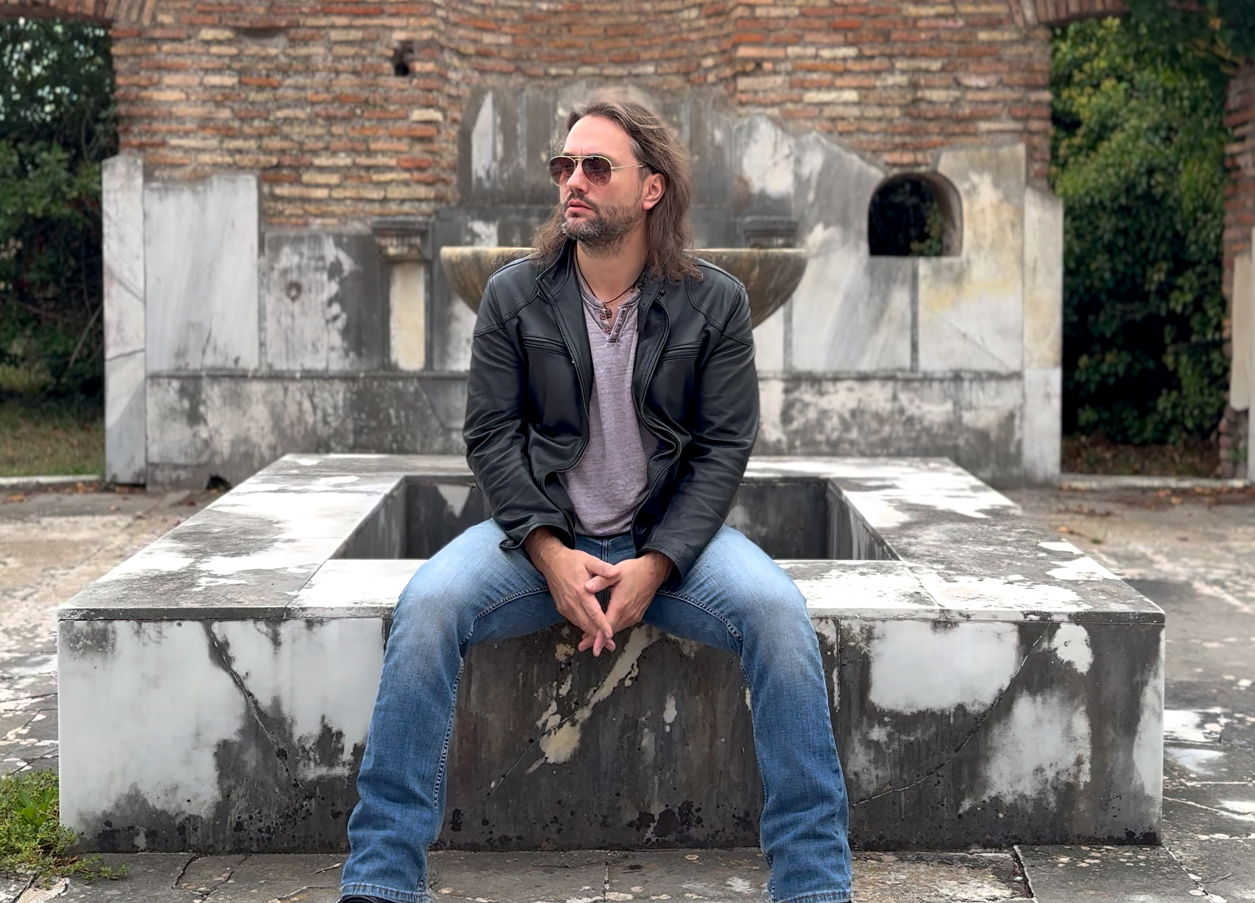
Louis Emory lives in Troy, New York. His debut EP, Love Italy, came out in 2022 and drew attention from The New York Times and Ben Fong-Torres — a journalist whose name is familiar to anyone who has ever leafed through Rolling Stone. Four years is a massive gap between a first and second release. Four years in which you can lose momentum, audience, confidence. Emory says it was his wife, Raeanne, who brought him back to music — quietly, persistently, without any ultimatums. This biographical detail matters, because it surfaces in the song “Time Keeps Passing By” with absolute clarity: you hear a man who has realized how much time has already slipped away, and that realization both frightens and propels him forward.
The Siege consists of six tracks — a format often treated with condescension, as a transitional gesture between singles and a proper album. Here, the six tracks work differently. The record is built on the principle of an energy descent: it opens hard, with the bluesy pressure of the title track “The Siege,” accelerates into the rock-and-roll drive of “Do What I Want To Do,” takes a country turn on “Cortona,” gently eases off on “Prophets Said,” drifts into ballad territory with “Time Keeps Passing By,” and quietly settles onto the acoustic bench of “Once Again.” And this descent is deliberate. You can feel the artist controlling the trajectory.
You could talk about Emory‘s voice for a long time, and I intend to. Because the voice here is the main argument. Emory sings in a way that lets you hear technique, timbre, and delivery all at once — and none of these things get in each other’s way. He handles a phrase with freedom — stretching vowels, dropping consonants, taking the intonation places a studio perfectionist would be afraid to go. On the title track, which is pure, thick blues, that voice sounds especially rich — gritty and muscular, with the kind of character that comes from people who are used to singing live first and recording second.
“Do What I Want To Do” is the lead single, the calling card, and a track you want to replay. I did. There’s a provocation here that belongs to good rock: the song speaks about resisting prejudice and false tolerance, speaks with swagger and rock-and-roll force, and still manages to stay in the zone of a statement rather than a shout. Emory sounds here like a man from the eighties who has landed with his convictions in 2026 — and decided that bending those convictions to the pressure of his surroundings is something he refuses to do. Greg Richling — co-founder of Pfonetic, former Grammy-winning bassist for The Wallflowers — says that Emory writes songs that are sorely scarce right now, and when it comes to “Do What I Want To Do” specifically, that assessment lands squarely.
I want to linger on “Cortona,” because this track does something important to the EP. It shifts the genre frame. The country here is real, classic, with a nineties flavor from the era when the genre still allowed itself to be cinematic. The song is named after a town in Italy, and the music video, shot on location — with Emory and his wife Raeanne — adds a layer of the personal. Emory himself describes “Cortona” as a bridge between Love Italy and The Siege: the song connects the two records emotionally and sonically, standing with one foot in the debut and the other in the new material. When “Cortona” ends, you’re already inside a different mood, and “Prophets Said” picks you up there, softly, with a romantic haze and a charisma that in Emory shifts from assertive to enveloping.
And now — to the EP’s finale, which struck me the hardest.
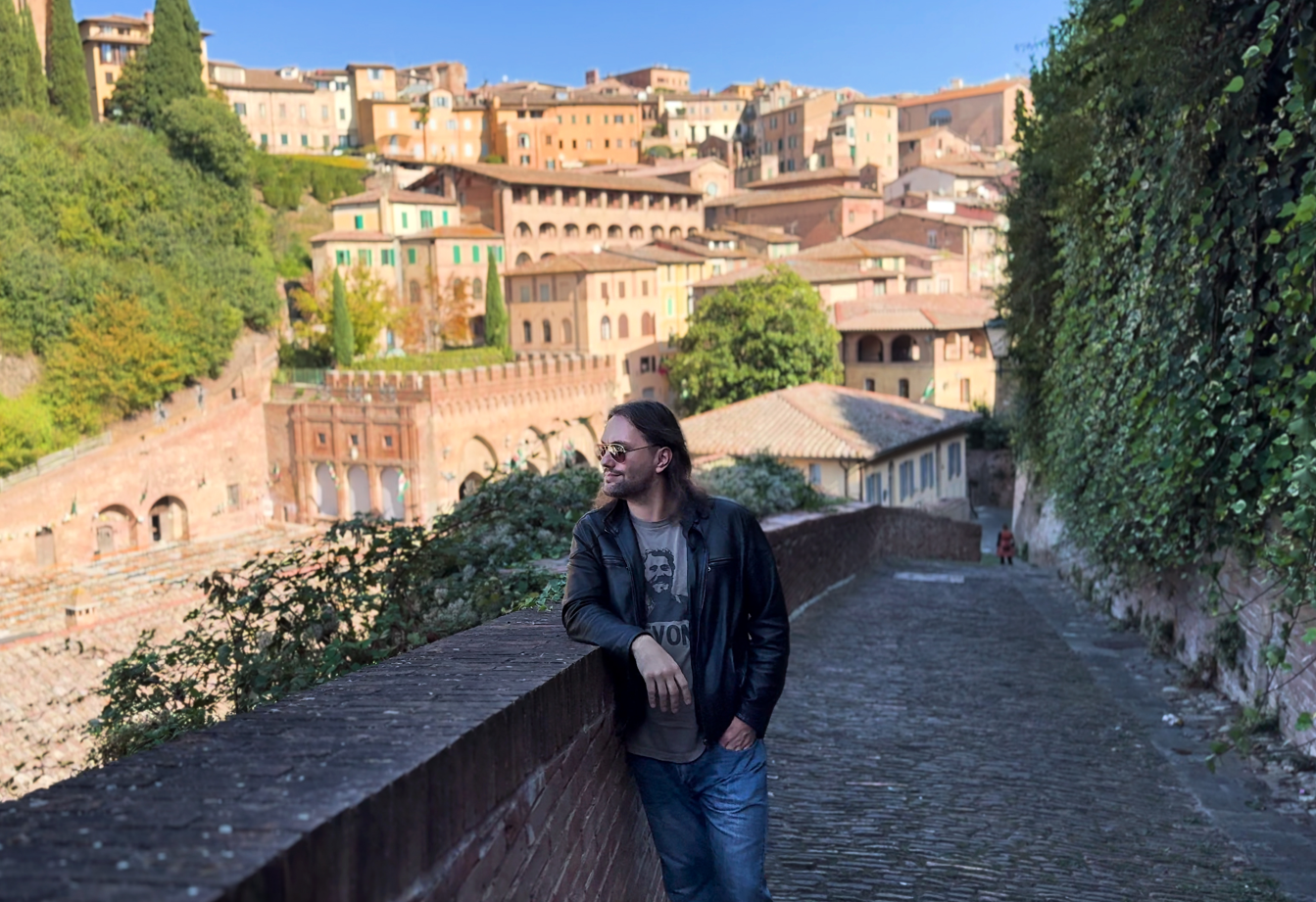
“Once Again” is a song born from specific pain: close family members whose departures left a void, Emory‘s mother, who was barely held onto. He himself points to the influence of George Harrison and All Things Must Pass, and the reference is palpable: “Once Again” moves through the same space — grief that has found some kind of foothold, the memory of those who are no longer here, and at the same time their presence — inside you, inside the music, in the air. The track is acoustic, with elements of country and folk. The EP closes quietly. The noise and energy that started it all have dissipated by this point — and what remains in the silence is what the artist had been hiding behind the blues and rock of the earlier tracks: a vulnerability he has finally allowed himself to sit with, alone, face to face with the listener.
Yakus behind the console, Bob Boyer and Tim Lynch — longtime collaborators of Emory‘s who have been playing with him since the debut. This EP was recorded with feel as the priority: the instruments are alive, the organ textures spread beneath the guitars, and the drums sound like drums, not samples. Yakus calls Emory one of the most promising unsigned artists of our time, and believe me, Yakus has heard enough music in his life that his bar for a compliment sits very high. When he says “promising,” he means exactly that — that behind the promise stands a potential that still hasn’t fully revealed itself.
The visual world of The Siege deserves attention too. The ruins of Ostia Antica — an ancient Roman port city, weathered walls, mosaics through which grass pushes up. Emory used this setting for the EP’s visual identity, and the choice of location is precise: stone that endured. Millennia-old structures that have lost their roofs, their floors, their purpose — and are still standing. If Love Italy was a journey — romance, road, history passing outside a train window — then The Siege, in Emory‘s own words, became a transitional EP, a moment when the music turned inward — toward questions of identity and resilience under pressure that Emory feels both from the outside and from within.
If you’re looking for something to pick at — the six tracks end sooner than you’d like. The energy descent from blues to folk feels slightly abrupt in places: you’ve only just gotten a taste of “Do What I Want To Do,” and the record is already veering toward the ballad. You want one more rock track somewhere in the middle — to let that voice open up at full volume for one song longer. But that very shortage is eloquent in itself — you want more because what’s there works.
The Siege was released on May 1, 2026, on all major streaming platforms. Listen to it in full, in order, from the first track to the last. This is a record that begins with a punch and ends with an open palm, and the journey between those two points is worth taking in its entirety, because the ending changes the beginning. When “Once Again” finishes and you mentally return to the title track, “The Siege” sounds different — deeper, heavier, more necessary. And that is the mark of a record people will come back to.
All information provided is prepared in accordance with editorial standards and is intended to offer useful insights for readers. Please note that the opinions, interpretations, and evaluations expressed by the author may substantially differ from the viewpoints of our readers or the general public at large, and we respect the diversity of opinions.






 Indie Boulevard Magazine