
Classical guitar rarely becomes the occasion for a conversation about grief, identity, and the color red. But Cuban guitarist Laura Mazon Franqui knows how to turn technique into confession.
Her new album Rojo, released on Prima Classic, is a journey through Latin American repertoire — from Tárrega to Leo Brouwer — and through a personal history that stretches from Havana to concert halls around the world. The title is more than a word. Red, here, is passion, the memory of grandparents, a friendship with Grammy-winning composer Claudia Montero, and music recorded during one of the most vulnerable periods of the artist’s life. We sat down with Laura to talk about how an album is born from loss, why classical guitar can be a radically personal instrument — and what it means to carry Cuban heritage beyond the island.
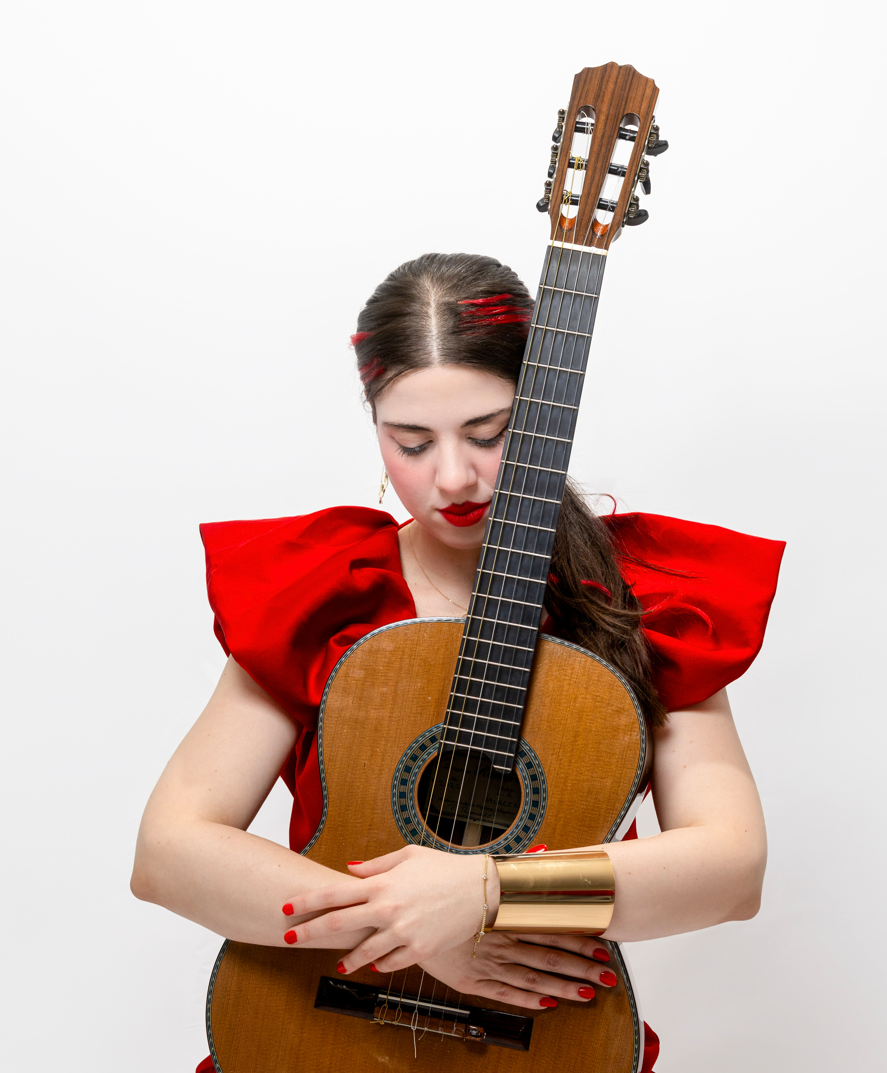
You’ve spoken about Claudia Montero encouraging you for years to make an album calledRojo — which means this record was, in some sense, someone else’s vision for you before it became yours. There’s something genuinely moving about that: a title held in trust by a friend, waiting for the moment you’d be ready to inhabit it. How do you understand the difference between a dream someone else holds for you and one you hold for yourself — and when did Rojo stop being her suggestion and start becoming your statement?
That’s such a beautiful question. I think sometimes the people who love us can see things in us before we’re able to see them ourselves. Claudia was one of those people for me. She believed in me during moments when my confidence wasn’t always at its strongest, and she had this incredible ability to see possibilities where others saw limitations. It all started by me lovign her piece “Rojo” and adding it to my concert repertoire, becoming a sort of “ambassador” of that piece; adn our shared predilection for the color. The dream of making an album was in me already, but I just waited to the rigth timing, the right opportunity. And when it all came together, Rojo ( the piece) and the concept of Rojo as a philosophy of life for me, then it just made sense to call the album that wasy, and to make her that piece the focus track. And it became what it is : an album became about passion, resilience, love, memory, and human emotions.
The album title Rojo carries a weight that goes far beyond color theory — passion, vitality, grief, remembrance, all compressed into a single word. And there’s something almost confrontational about naming a classical guitar record after something so visceral. What did it feel like to commit to that word as the organizing principle of the record — and did it begin shaping the way you played once the title existed?
Absolutely. Once I committed to the title, it started becoming a lens through which I viewed the entire project. Every piece was suddenly part of a larger conversation. What I liked about Rojo is that it’s not a polite word. It’s immediate. You feel it. It’s the color of love, but also courage. It’s warmth, but it’s also intensity. It can represent celebration and grief at the same time. It is the way i envision life, as a passionate person myself. Also, just because the classical guitar is mostluy know for its warm and soothing sound, doens’t mean that there are not fiery and emtionally intense moments in its repertoire! There are many, many intense pieces that our instrument is able to perform and immediately draw you in.
You describe Rojo as having been forged during one of the most vulnerable chapters of your life — grief, uncertainty, transformation. And you chose to leave traces of that vulnerability in the recording itself: breaths, fragility, moments that feel unmistakably human rather than polished away. Was there a specific moment where you decided those details needed to remain in the final version?
There wasn’t one dramatic moment. It happened gradually. Like many musicians, I grew up wanting everything to be flawless. You listen for every little imperfection. But while working on Rojo, I started asking myself a different question: what am I actually trying to communicate? There were moments during editing where we could have cleaned things up even more, but sometimes those little breaths or tiny imperfections carried the emotional truth of the performance. Removing them would have made the recording technically cleaner, but emotionally less honest. At some point I realized that what moved me wasn’t perfection—it was humanity. Once I accepted that, the decision became much easier.
Rojo is dedicated to your grandfather, grandmother, and aunt — people whose influence and loss are woven through the emotional architecture of the album. How do you balance the intimacy of creating music connected to personal grief with the reality of releasing it publicly into the world?
I think the reason I was willing to share it is because grief is deeply personal, but it’s also universal. Also rather than thinking about it as a “groef” album, I like to think about it as an “homage album”, as it showcases a plethora of emotions that are all part of the huma experience. The stories behind the album belong to me and my family, but the emotions themselves belong to everyone. We’ve all loved someone. We’ve all lost someone. We’ve all carried memories that continue to shape us. We have all been in love, and had happy moments that still live within us. We all have stories. For me, the goal was never to tell every detail of my story. The goal was to create a space where listeners could bring their own stories into the music. If someone listens to Rojo and thinks about a person they love, then the album has done its job.
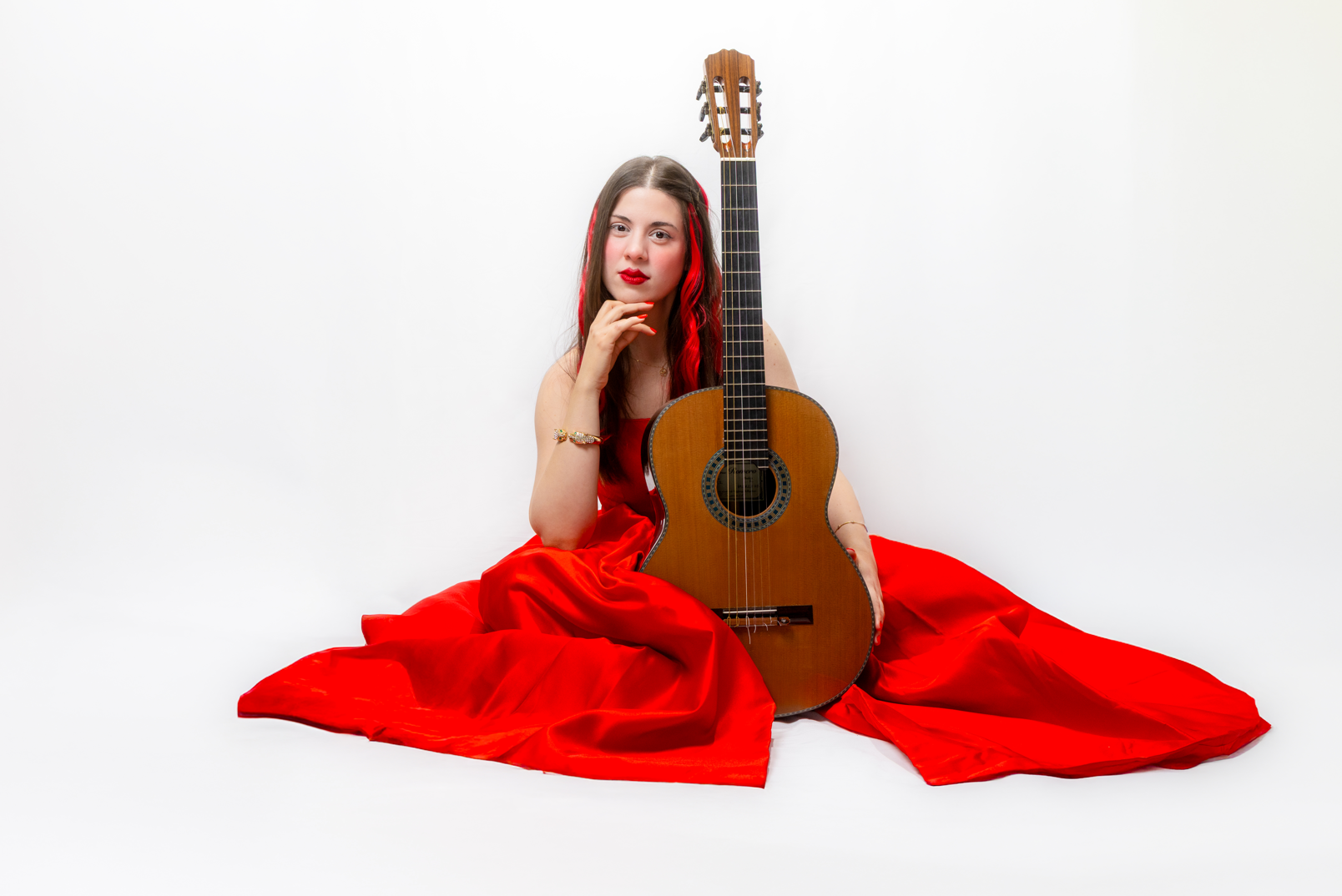
You invoke the image of Hephaestus forging Achilles’ shield as a metaphor for this recording — creating something lasting out of labor and emotion. But the shield in that myth also becomes tied to vulnerability and loss. What’s the part of yourself within Rojo that felt most difficult to make public?
Probably the fact that I didn’t have all the answers. As artists, we’re often expected to present a finished version of ourselves. A polished version. Someone who has figured everything out. But Rojo was created while I was still in the middle of processing things. I wasn’t standing at the end of a journey looking back. I was living it. Allowing people to see that uncertainty—to see someone who is still learning, grieving, growing, and searching—was probably the most vulnerable part of the project.
Leo Brouwer appears in your story almost like a mythological figure — joining a children’s guitar orchestra at ten years old and later performing under his direction at Festival de La Habana. But biographies often smooth over the reality of those formative experiences. What do you personally remember most vividly from those early years that official versions of the story tend to leave out?
Honestly, I remember a lot of laughter. When people tell the story now, it sounds very serious and impressive. But I was a kid. I remember friendships, rehearsals, excitement, getting nervous before performances, and being amazed that music could bring so many people together. Of course, I understood that Maestro Brouwer was an important figure, but what stayed with me most wasn’t prestige; it was inspiration. It was seeing someone dedicate their life to creating art and realizing that music could be a way of life, and the unique way of envisioning music that he had/has. One afternoon with him felt like years of learning, not only about music, but about the philosophies of art and life
You’ve built a repertoire that consistently centers Hispanic and Latin American composers — Brouwer, Villa-Lobos, Turina, Morel, Claudia Montero — alongside contemporary collaborators like Carlos Rafael Rivera. How conscious are you of your relationship with the traditional classical guitar canon when curating your programs and recordings?
Very conscious, actually. I love the traditional canon and I believe it’s important to know where we come from. At the same time, I’ve always felt a responsibility to contribute to the conversation, not just repeat it. As a Cuban and Latin American artist, I naturally feel connected to this repertoire because it’s part of my cultural and musical identity. These are stories and voices that shaped me. What excites me most is creating programs where tradition and discovery can exist together. I want audiences to reconnect with familiar masterpieces while also encountering music and composers they may not have known before.
Carlos Rafael Rivera described your interpretation of Canción as “nostalgic and luminous,” which raises an interesting question about interpretation itself. When performing the work of living composers, have you ever approached a piece in a way you knew differed from what the composer originally imagined?
Sometimes…and sometimes that’s where the most interesting conversations happen. One of the wonderful things about working with living composers is that you can actually ask questions and exchange ideas. Music becomes a dialogue rather than a historical puzzle. There have definitely been moments when I’ve heard something differently than the composer initially envisioned. But the best collaborations are built on trust. A great composer understands that performers bring their own experiences and perspectives to the music. Sometimes those differences reveal possibilities that neither person had considered before.
Your digital presence — collaborations with Guitar Center, HBO and Joe Bonamassa, alongside a large online following — exists in a very different world from the concert halls and conservatories that shape the other side of your career. Where do you feel the tension between those two spaces most strongly?
I think the biggest tension comes from expectations. Sometimes people assume that social media is superficial, or that classical music must exist within very traditional spaces. I’ve never really agreed with that. For me, they’re both forms of communication. A concert hall allows for one kind of connection. A phone screen allows for another. The challenge is staying authentic in both environments. Whether I’m performing a recital or posting a video online, I want people to encounter the same person. The format changes, but the purpose doesn’t.
You were born into a musical culture shaped by Cuba and later built a career across the United States, Europe and Latin America. Is there something about Cuban classical guitar tradition that you feel international audiences or institutions still misunderstand when they encounter your work?
I think people are often surprised by how rich and diverse it is. Sometimes when people think of Cuban music, they immediately think of dance rhythms, popular music, or certain cultural stereotypes. Those traditions are wonderful and important, but they’re only part of the story. Cuba also has an extraordinary classical tradition and a remarkable guitar legacy. Composers like Leo Brouwer helped shape the instrument on a global level, and generations of musicians have contributed to a vibrant artistic culture that deserves greater visibility. What I hope audiences discover is that Cuban music contains incredible depth and complexity, and so does the Classical Guitar cuban school. Our musci is famour for being positive and joyful, but it goes well beyond that: it’s also thoughtful,diverse, sophisticated, poetic, and endlessly creative, and so is the Cuban classical guitar tradition.
All information provided is prepared in accordance with editorial standards and is intended to offer useful insights for readers. Please note that the opinions, interpretations, and evaluations expressed by the author may substantially differ from the viewpoints of our readers or the general public at large, and we respect the diversity of opinions.




 Indie Boulevard Magazine