Thirty-three albums. I want to stay with that number for a second before talking about the music, because thirty-three albums changes the way you hear everything that follows. Most artists I review are on their first, second, maybe fifth record. At thirty-three, the conversation is fundamentally different. Proving yourself is behind you. So is establishing a sound, or meeting anyone’s expectation that you’ll reinvent.
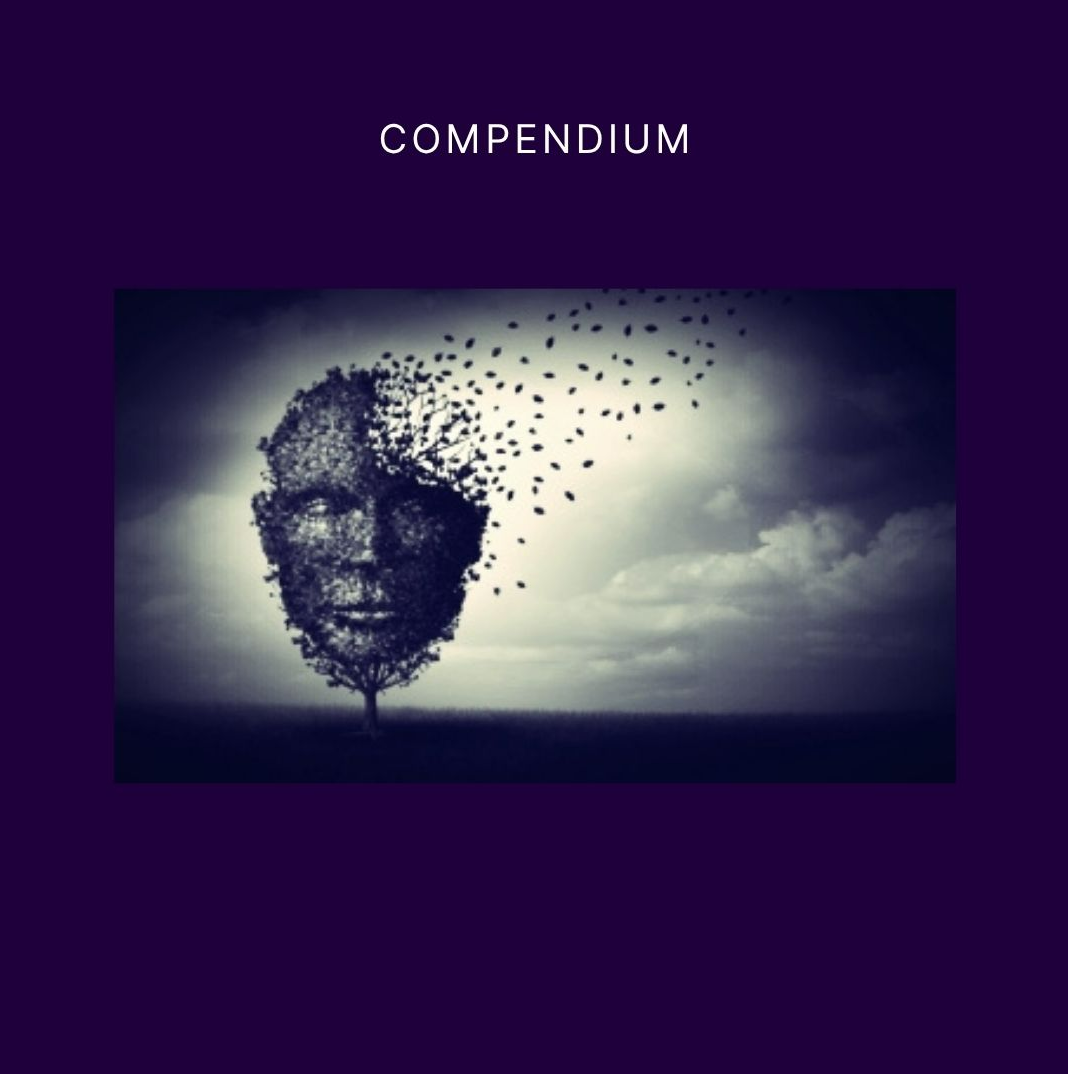
And yet Simon Talbot went and named this one Compendium, which literally means “a collection of concise information,” and that’s either the most modest or the most ambitious title for a thirty-third album I can think of. A summary. Of what? Of everything? Of the last thirty-two? Of a worldview assembled across decades of recording? The title raises these questions and then the album starts playing and you realize Talbot seems entirely uninterested in answering them for you. Ten tracks, alternative rock, heavier and sharper than his previous work. Figure it out yourself.
The sound caught me off guard. Written across the winter, spring, and summer of 2023, Compendium leans into alternative rock with a weight and a contrast that apparently exceeds what Talbot has done before. Having followed Talbot’s output across multiple albums at this point, I can say that Compendium hits differently in context: the heavier arrangements feel like a deliberate escalation, a choice made by someone who decided the thirty-third time around was the moment to push harder. The arrangements run hot: guitars and drums competing for space, synths threading through the gaps, and Talbot’s vocal sitting on top of all of it with a calm that borders on defiance. That’s the tension driving this record. Everything surrounding the voice is loud, sharp, at times almost aggressive. The voice itself stays measured, steady, human. The contrast is deliberate and it works, and once you notice it, you hear it on every track.
“The Commitment” locked me in. Heavy guitars, sharp drums, synth notes stretched long over delayed guitar, and an anxious atmosphere the arrangement builds brick by brick. But Talbot’s vocal floats through it like he’s reading the weather forecast. That disconnect should be disorienting. It’s actually hypnotic. The song creates a kind of emotional vertigo where the instrumentation says one thing and the voice says another, and you believe both simultaneously. I played it twice in a row, which I almost noted as a professional observation but is actually just something that happened because I wanted to hear it again. Sometimes the honest explanation is the boring one.
“Tribe” pushes further into experimental territory: hard rock with keyboards carving their own melodic line while guitars genuinely roar (I try to avoid the word “roaring” in reviews because it’s been applied to every rock album since 1974, but here it applies, and I’m using it). “The Man Who Would Be God” opens with a thematic challenge and drumming that pushes itself to the front of the mix, almost confrontationally. These are tracks where Talbot seems to be testing how much density his arrangements can absorb, and the answer, on Compendium at least, is: quite a lot. The ten songs on this album each present a different angle on the world, a different emotional vantage point, and the idea seems to be that together they form something complete, a system of thought assembled through sound. Whether you buy that framing depends on how much credit you’re willing to extend to an artist who has released thirty-two previous records. I’m extending it.
“The Devils Chair” and “Disorder” sit next to each other in the tracklist and the pairing is the album’s smartest sequencing move. “The Devils Chair” brings bright vocal energy and a social urgency; “Disorder” drops immediately into something low, heavy, dense with rock texture, Talbot‘s voice threading through the dark arrangement with its usual steadiness. I’d put this two-track run up against any similar pairing on a higher-profile release this year. That’s a bold claim and I’m making it anyway.
The closing sequence shifts the terms. “Life” arrives with lighter guitar riffs and a dreamy quality that feels like a deliberate exhale after the density preceding it, and just when you’re settling into the softness, the harmonies disrupt and the track shakes itself awake. “Born Again” follows immediately by slamming back into hard, heavy sound, and as a closer it draws a line through everything: Compendium is built on contrasts. Light and heavy, calm and loud, dreaming and waking, soft vocal and crushing arrangement. The album makes its argument through juxtaposition, and “Born Again” is the exclamation point.
The sound being heavier and sharper than previous work suggests Talbot is still pushing forward, still escalating, still treating each album as an opportunity to test what his arrangements can hold.
What holds Compendium together, after all the shifts between heaviness and light, between roaring guitars and that impossibly calm vocal, is that it reads as one person’s attempt to map the full range of what they feel. Each track offers a different vantage point, and the sequencing suggests Talbot thought carefully about the order: anxiety gives way to aggression, aggression to social urgency, urgency to dream, dream to force. The title promises a collection, and the album delivers one, but it’s messier and more alive than that word usually implies. A compendium, by definition, should feel organized. This one feels felt. That’s a better outcome.
YOU MIGHT ALSO LIKE
All information provided is prepared in accordance with editorial standards and is intended to offer useful insights for readers. Please note that the opinions, interpretations, and evaluations expressed by the author may substantially differ from the viewpoints of our readers or the general public at large, and we respect the diversity of opinions.