
We live in crazy times, because now more than ever the Industry demands content. Remixes, deluxe versions, visual albums, TikTok campaigns, merch, collaborations, acoustic versions, Spotify Singles sessions. A release turns into endless encrustation, where the original idea suffocates under layers of marketing superstructures. Lily Forte named her new album Don’t Gild The Lily — a reference to a misquote from Shakespeare that has become an established expression over time. Gilding the lily is meaningless. Beauty cannot be improved by excess.
The album was recorded in a garage with her collaborators James Cain and Julia McKay. Trumpet, double bass, guitar, piano, drums — all at once, almost entirely live. Her new album follows 2024’s Can’t Handle Hollywood. Forte wrote the first two tracks — “Loners on the West” and “Stardust” — at a moment when externally everything was going well: publications, releases, studio work. But something was missing. The stage. Performances. That fear of a forgotten lyric, that possibility of improvisation that’s impossible to recreate in the studio, even if you try very hard.
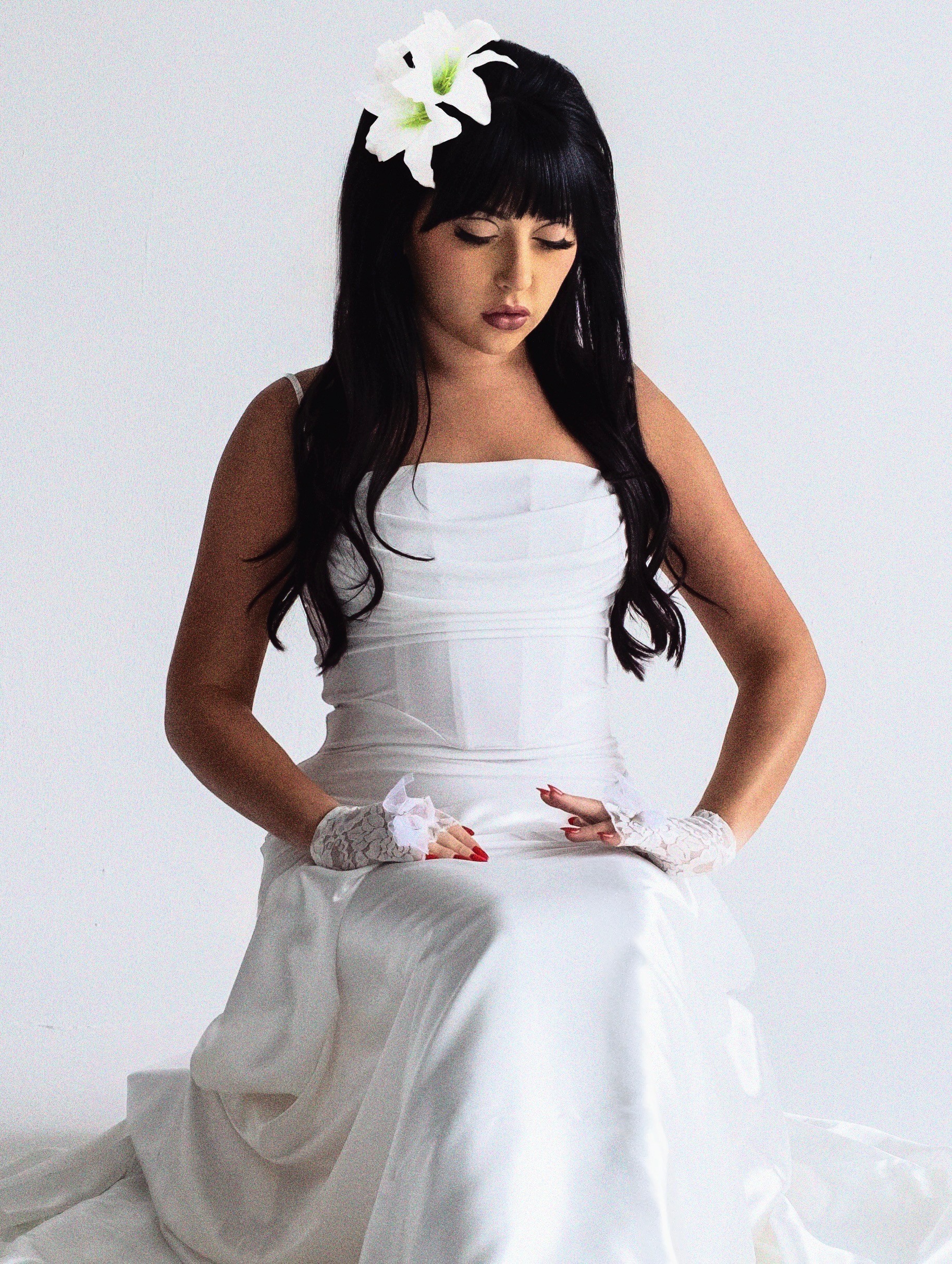
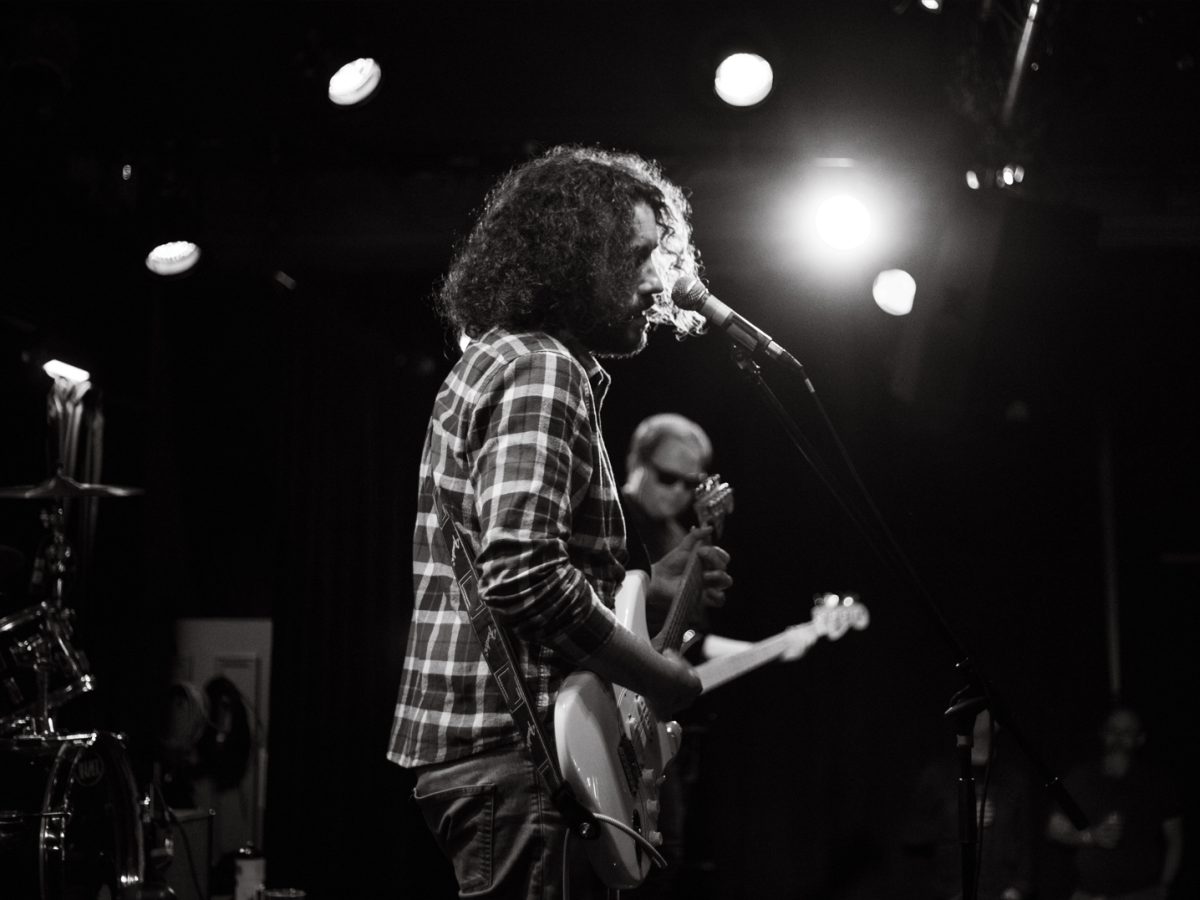
photo by Julia McKay
Getting in touch with Forte proved to be a task. Weeks of correspondence, a schedule between the studio, tour preparation, and shooting a music video for the title track. But the conversation eventually happened. She talks about the tears at the beginning of the vocal take for“Baby Burnt Us Down,” which she decided to keep. About the fine line between imitation and inspiration. About the contradiction between the album’s philosophy and her own visual aesthetic — bold makeup, old Hollywood glamour, layers of beauty over the natural.
Hello Lily! We’re glad you found time to talk with us. So, your new album… You recorded the album in a garage. You went in the opposite direction — live musicians, trumpet, bass, guitar, piano, drums, all together, simultaneously, in a space without acoustic treatment and million-dollar mixing consoles. When you first heard the final mixes of this album, what sounds or moments broke through your usual perception of your own music?
Thank you for having me! When I first heard the mixes, I felt transported to a dark dive bar with a stage. The live sound is very present in these recordings. My usual perception of my music consists of a more tailor made approach. This time around, there was room for improvisation which made it all the more fun.
“Don’t Gild The Lily” — the title track references Shakespeare, but you’ve transformed the quote into a personal manifesto. The idea that beauty cannot be improved by excess is radical for the music industry of 2026, where every release becomes encrusted with remixes, deluxe versions, visual albums, merch, TikTok campaigns. Is there a moment when an artist risks ruining the original idea simply because the market demands continuation, expansion, new versions?
I think there’s only so many chances we get as artists, so it’s important to take them when we do. Sometimes, if we wait too long, the moment is over. I feel this way even just in writing. If I get an idea when I am out somewhere and I don’t immediately write it down, the moment passes quickly. The good stuff comes when you trust your gut, even if it doesn’t make sense initially. If the moment calls to expand on an idea whether it be a new version or remix of a song, then do it. But when it’s forced, it seems unnecessary in my eyes.
You wrote “Loners on the West” and “Stardust” at a time when life was giving you a lot, but you still felt the absence of the stage. In musical culture, there’s a romanticization of isolation — the artist in the attic, hungry, misunderstood, creating masterpieces in a vacuum. But your experience reveals another side: isolation comes even when things look good externally, when your career is moving forward, when work is happening. Why did the absence of the stage feel like an existential emptiness, while everything else — publications, releases, studio work — proved insufficient?
Truthfully, I think there was just so much music that still needed to be written. I felt like I had so much to say and prove, which I hadn’t done yet. I felt like I talked the talk but had nothing to show for it until I wrote this album. I am so proud of it.
What exactly does live performance give you that’s impossible to get from either the recording process or streaming plays?
Playing live is what keeps rock n roll alive in my eyes. There’s a unique opportunity we get as an artist when we are on a stage… anything goes and anything can happen. There is just the right amount of fear present. The fear that the song may take an unexpected turn, or the feeling of your stomach dropping when you know you are about to forget the next lyric. In these human moments that happen live, we don’t get a chance to redo them a thousand times over. It’s nearly impossible to replicate that feeling in the studio. (although you can come pretty close.) It’s the moment on stage where you can channel the preparation you’ve done beforehand which allows you to let go and see where the song takes you.
“Jimi and Janis” — your tribute to legends, but both of these artists died at 27, both became icons of self-destruction, both embody the romanticization of tragedy in rock and roll. You were born decades after their deaths, you know their music through recordings, museums, documentaries. Your generation grew up with access to all of music history simultaneously — Spotify equalizes Hendrix and contemporary artists in the same playlist. When you write a song about historical figures whom you only know through archives and mythology, how do you avoid the museum approach?
I’ve always had this weird sense like I knew these musicians personally. I feel like in another life, I was there creating art with them. I think maybe I’m just a little delusional, or maybe we are all more connected than we think? For me, it’s so important to memorialize the greats. But I’ve always struggled with how much detail to go into when describing them. Over time, I realized, even by just mentioning their name, we keep them alive. And for the people who don’t know them and wonder about their legacy, they are in for a real treat when they do a deep dive. Truthfully, there’s no way for me to avoid a misinterpretation of my admiration for them – except always remembering the fine line between imitation and inspiration.
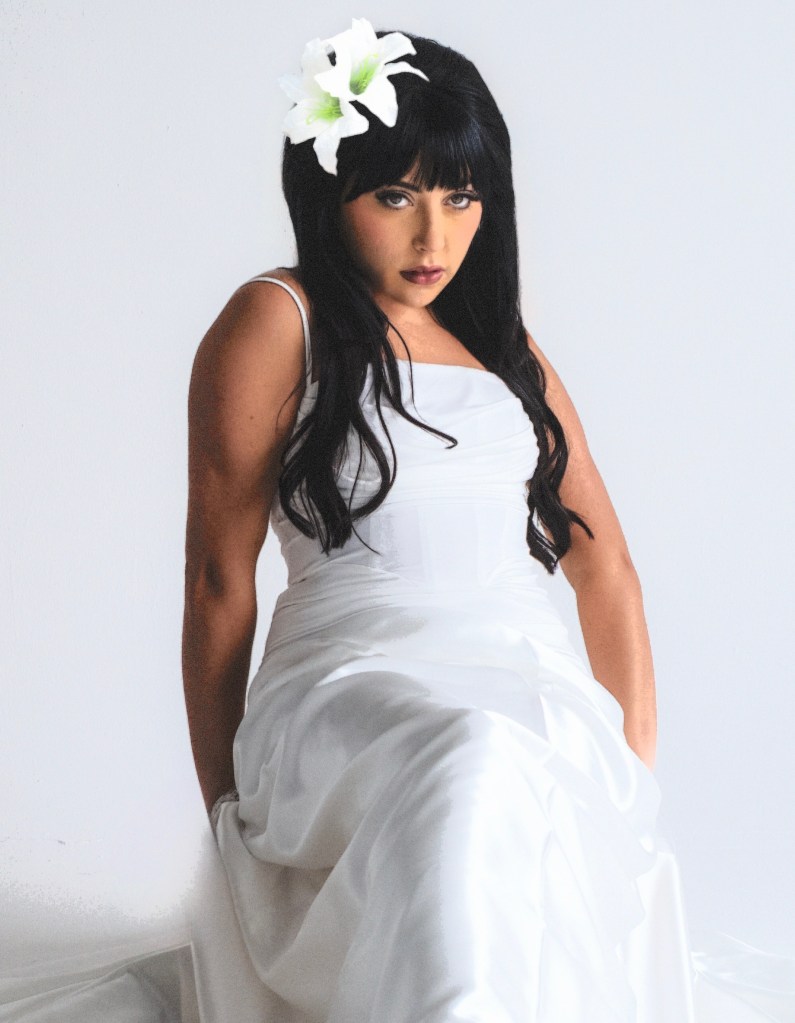
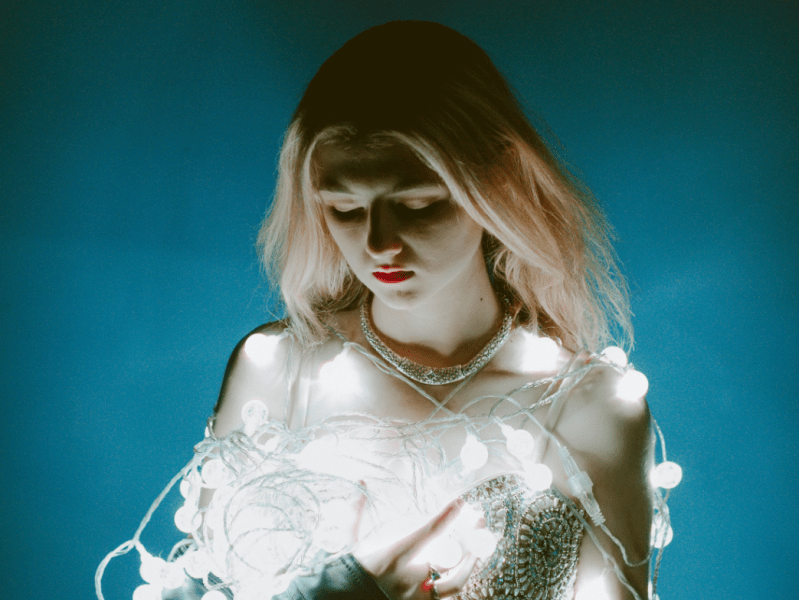
photo by Julia McKay
Your vocal style is very reminiscent of Amy Winehouse and Carole King — artists with fundamentally different destinies and approaches. Both possessed alto voices, both wrote personal lyrics, but their stories represent two poles of musical life. Do you choose references to them consciously, or do others assign you these comparisons?
I love this question. I grew up listening to Carole King with my mom, and one of my earliest memories is listening to Tapestry in the car with her. King became a huge inspiration for me, especially in songwriting. As for Amy, I always loved her popular tunes. It wasn’t until the last few years that I did a deep dive on her and fell so in love with the music and her voice. So, I would say I consciously lean into both of their styles when creating. The grit and power of Amy Winehouse and the subtle pain of Carole King’s writing are my favorite.
Were there moments during recording when you wanted to stop and redo something, but you understood that the magic was precisely in that imperfect but living version? How do you make the decision to keep a take that could technically be improved, but emotionally — is already perfect?
A hundred percent. With the album name, Don’t Gild the Lily, I felt it was important to live by that saying in my creation process – at least to some extent. A moment I immediately thought of was when recording “Baby Burnt Us Down.” That was an emotional one for me and in the beginning of the vocal take you can hear me attempting to hold back tears. Leaving that in kept the moment alive forever, which I find magical.
You played at the Troubadour — a place where Joni Mitchell, Elton John, and the Eagles performed at the start of their careers. These venues carry historical weight, they’re saturated with the mythology of breakthroughs and discoveries. When you walk onto the stage in such places, do you feel the pressure of history or, conversely, does the connection with tradition give you strength?
At these venues, I feel so much connection to the history of the music. Not on this record but my previous record, there is a song called “Lifeline” and in it I say, “they came before me, they’ve done this before, I’m not alone anymore.” Of course there is a pressure to give my best performance at a place like The Troubadour, but if I can close my eyes and think about my inspirations who have performed there before me, I feel at peace.
“Baby Burnt Us Down” and “Beauty in Everything” — stripped-back tracks where your vocals come to the forefront without dense arrangements. You chose a rich album sound with a live ensemble, but these two tracks stand apart, like moments of complete vulnerability. Why did precisely these songs require such nakedness? What was happening in the studio when you recorded them — was this a conscious dramaturgy of the album, or an intuitive decision that certain words cannot be hidden behind instruments?
With so much beautiful chaos in the rest of the album, I was drawn to create these two simple songs. I knew there was still more to the story but I wasn’t sure what I wanted to say or how I wanted to say it. I would eventually find myself home alone at the piano, and these songs came to life. When I brought these songs to James in the studio, we knew they didn’t require much. It was as if the lyrics could exist as a poem without any music at all.
The album is called “Don’t Gild The Lily,” but your visual aesthetic — bold makeup, old Hollywood glamor — is built precisely on gilding, on adding layers of beauty over the natural. Makeup, costumes, styling — these are all forms of embellishment. An interesting contradiction emerges between the album’s philosophy and its visual presentation. How do you separate these two dimensions of artistry? Do different rules exist for sound and for image, or are makeup and glamour also a form of honesty, a way to show internal state through external transformation?
This contradiction is ever present in my artistry. The makeup and the hair is such a fun layer, but the rewarding part is the music and the emotions I discover through it. Giving myself the freedom to speak my mind in the music and whatever that means emotionally, is the real art. I believe the glamor is a product of the emotion. For me, getting all dolled up doesn’t necessarily mean my look is manufactured, more so curated to match a feeling internally.
All information provided is prepared in accordance with editorial standards and is intended to offer useful insights for readers. Please note that the opinions, interpretations, and evaluations expressed by the author may substantially differ from the viewpoints of our readers or the general public at large, and we respect the diversity of opinions.



 Indie Boulevard Magazine