
Bald Chewbacca has released “Bald Chewbacca at the World Cup“ — an experimental album in which the football World Cup is broken down into eight tracks along a geographic principle: Argentina, England, Spain, Brazil, Curaçao, plus three host nations (US, Canada, Mexico) encoded in the closing “Texicada.” The release continues Bald Chewbacca‘s line of thematic albums: after “Bald Chewbacca at the Olympics” (2024) and “Bald Chewbacca for Chancellor” (2025), it is world football’s turn. Each track is a separate match, a separate country, a separate sonic environment. The album has already drawn listeners’ attention with its unusual approach to genre, though it remains fairly challenging for those with little connection to the world of football.
“Bald Chewbacca at the World Cup” is the third chapter in a series of thematic albums where Bald Chewbacca takes a major world event and runs it through an experimental filter. The Olympics, the chancellorship, now the World Cup. The format has settled in: a large-scale theme, a geographic breakdown, an electronic core. Among the album’s recurring images is the figure of a footballer who dreams of being behind the decks: by day — the battle for the ball, the roar of fans, commentary flying into the scorching air, and when his eyes close — strobes, a hazy club, someone else’s life that could have become his own. Two parallel existences compressed into a single subconscious. Bald Chewbacca captured the sound of that subconscious — and stretched it across eight chapters.

The method here matters. The album is structured like a tournament bracket: an introduction, five countries, an interlude, and a final spanning three host nations. Between “Argentina” and “England,” the “Falkland-Malvinas Interlude” wedges itself in — a reminder that beyond the World Cup, real life exists with real conflicts, and events like the World Cup only briefly push them aside. Each country carries its own temperature, its own air density, its own rules of combat. Geography here is part of the dramaturgy. And Bald Chewbacca uses this to the fullest: the tracks shift rhythm, texture, mood — sometimes abruptly, sometimes smoothly — while maintaining the overarching tonality of cosmic experimentalism, threaded through with club pulsation.
The opener “Introduction“ functions as a prologue: an AI priest announces the album, establishing a ceremonial frame for everything that follows. The track operates as a pre-match ritual — only instead of a stadium announcer, what we hear is the voice of a machine bestowing its blessing upon the tournament. The intonation immediately pulls the listener into a space where football and technology intertwine.
“Argentina“ opens with a sampled Maradona speech — and that choice instantly anchors the track to a specific point on the map. The bandoneón in the background — the sole acoustic instrument — marks the geography before the electronics take over. From there, the track develops in its own direction, veering away from the expected and constructing the battle for the ball through the prism of Argentine temperament.
The “Falkland-Malvinas Interlude“ is a pause between Argentina and England — and a deliberate one. Rather than immediately transporting the listener from Argentine temperament to English pragmatism, Bald Chewbacca inserts a reminder: behind the World Cup stands real history, real conflicts, real pain between nations. The interlude functions as a connecting dot — and simultaneously as a cold shower, pulling us back to what happens beyond the stadium walls.
“England“ changes the weather. An icy stadium, a volcano of passions stirring awake. Here, voices appear — a different rhythm, denser, noisier. Fans, rain on the pitch, commentary cutting through the air above the stands. The intensity builds — and then the tactics shift: instead of pure adrenaline, the players switch to cunning and calculation, pushing to clinch the result. Bald Chewbacca catches that switch — the moment when English pragmatism overtakes passion — and renders it in sound.
“Spain“ veers toward reggaeton — a deliberately crooked, fractured reggaeton at that. The beat drifts off course, loses its footing, and it is precisely in that malfunction that the track’s character is born. There is plenty of theatricality here — more voices, more laughter, more nerves — and all of it unfolds over a rhythmic foundation that itself sounds like a tactical error turned into a style.
“Brazil“ shifts the register entirely: rhythmic Latin grooves, splashes of a tsunami beyond the palm trees, the carnival energy of Rio squeezed into the format of a match. The players battle playfully — and then the coach intervenes. Losing his temper, barking a couple of sharp lines, he steers the team back to the ball. A contest with a dancing character, where even the fight for the ball looks like a samba.
“Curaçao“ brings a Caribbean intonation into the tournament bracket — a separate point on the map with its own energy, expanding the album’s geography beyond the obvious football capitals.
The closing “Texicada [Extended Highlights]“ — a portmanteau of Texas, Canada, and Mexico — is dedicated to the three host nations of the tournament (US, Canada, Mexico) and gathers the fragments of all preceding matches into a single informational stream: a multitude of commentary in acoustic processing, the cries of fans, dance breaks. The track works as an extended highlight reel where the boundaries between matches dissolve and individual moments of the tournament merge into one continuous soundscape.
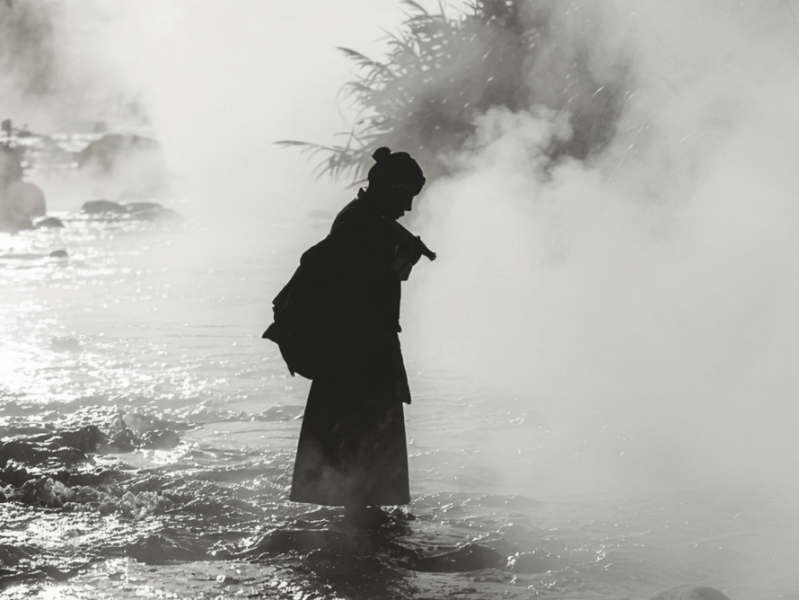
What is this album actually about — beyond football? About the collision of worlds. About how one global event looks from eight different points on the map — and about the fact that between those points, real conflicts exist which the World Cup only briefly puts on pause. Bald Chewbacca has constructed a geography of emotions: Spain wraps reggaeton in theatrical nervousness, England languishes in fog and pragmatism, Brazil tunes the game to a more lighthearted key, and the “Falkland-Malvinas Interlude” sharply snaps everything back to reality — and you feel it in the rhythm, in the playing style, in the way the music addresses the listener’s body.
Eight tracks is a rather rigid format for an idea of this scale. Sometimes the atmosphere is only just gathering density when it already switches to the next geographic coordinate. You want more air, more time inside each match. Yet it is precisely this compression that, in my subjective view, becomes the very hook: the album moves at the pace of a real tournament, where every half has an end and everything cuts off at its peak.
“Bald Chewbacca at the World Cup” is an album that charges you. A charge for those who are running on empty. The third chapter in a series of thematic experimental releases, and so far the most geographically ambitious: after the Olympics and the chancellorship, Bald Chewbacca has unfolded a world map and placed stadiums, interludes, and host nations across it. Here the stadium transforms into a club, the match into a trance session, the commentary into samples, and the “Falkland-Malvinas Interlude” reminds you that beyond the arena walls, an entirely different game is being played. Eight countries, eight flashes of the subconscious, eight battles — from Maradona‘s speech over a bandoneón in Argentina to the carnival chaos of Brazil and the closing “Texicada,” stitching three host nations into a single soundscape. Turn it up to full volume. The final whistle has blown. The stadium is empty. The secrets remain hanging in the air — and keep on sounding long after the music has ended.
*This review was made possible by SubmitHub








 Indie Boulevard Magazine